Push ads and popunder ads are both direct-response ad formats. Advertisers use them to drive visits, leads, sales, app installs, and offer testing.
The better choice depends on your campaign goal. Push ads work well when you need fast clicks from short messages. Popunder ads work well when you want high-volume landing page visits with fewer creative assets.
Key Takeaways
- Use push ads for short offers, retargeting, repeat engagement, and mobile-first campaigns.
- Use pop under ads for high-volume traffic, direct landing pages, affiliate offers, and fast testing.
- Push ads need strong copy and clear visuals.
- Popunders need a fast, focused landing page.
- Many advertisers test both formats with separate budgets and source-level tracking.
What Are Push Ads?
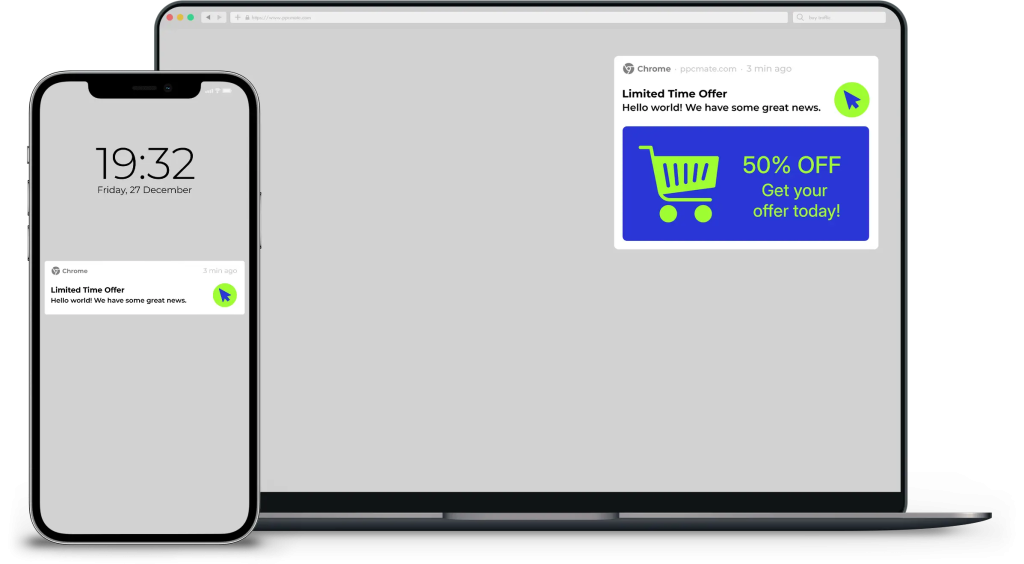
Push ads are notification-style ads shown on a user’s device or browser. They usually include a short headline, small image or icon, and a call to action.
Advertisers planning push traffic tests should focus on clear offers, strong timing, and tight targeting. Push ads work best when the message can be understood quickly.
Push Ads Are Best For
- Time-sensitive offers
- E-commerce deals
- App installs
- Lead generation
- Retargeting
- Finance, sweepstakes, utility, and subscription offers
What Are Popunder Ads?
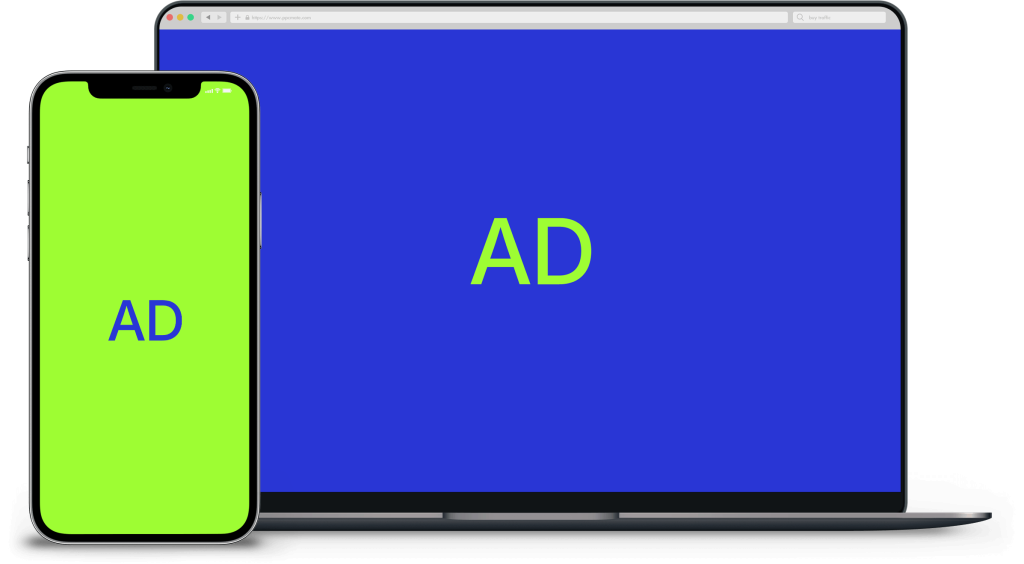
Popunder ads open a landing page behind the user’s active browser window or tab. The user usually sees the page after closing or switching from the current page.
For advertisers, popunder traffic buying is useful when the landing page does most of the selling. It gives the offer a full-page view instead of a small ad space.
Popunder Ads Are Best For
- High-volume traffic testing
- Affiliate campaigns
- Lead forms
- Sweepstakes
- Downloads
- Adult, entertainment, finance, and utility offers
- Simple direct-response funnels
Push Ads vs Popunder Ads: Quick Comparison
| Attribute | Push Ads | Popunder Ads |
| User experience | Notification-style message | Full landing page opens behind active page |
| Creative need | Headline, icon, image, short text | Mostly landing page |
| Main strength | Fast engagement | High-volume visits |
| Best buying model | CPC or CPA optimization | CPM, CPC, or CPA optimization |
| Funnel role | Click trigger and re-engagement | Direct landing page exposure |
| Best device fit | Strong on mobile and desktop | Strong on desktop and some mobile traffic |
| Main risk | Weak copy lowers CTR | Poor landing page increases bounce rate |
| Optimization focus | Copy, image, targeting, timing | Sources, landing page, frequency, bid |
When Should Advertisers Use Push Ads?
Use push ads when your offer can be explained in one short message. Push works well when the user does not need a long story before clicking.
Strong push campaigns usually have:
- A clear benefit
- A short headline
- A direct call to action
- Relevant GEO and device targeting
- Clean tracking for clicks and conversions
For better performance, notification ad basics should guide how you write the headline and choose the visual. The ad should make the next action obvious.
When Should Advertisers Use Popunder Ads?
Use popunder ads when you want the user to land directly on a full-page offer. This format is useful when the landing page explains the product, shows proof, and pushes the user toward action.
Popunder campaigns work best when:
- The landing page loads fast
- The offer is simple
- The CTA is visible above the fold
- Tracking is set up before launch
- Weak sources are blocked quickly
Advertisers can improve pop-up click behavior by matching the page message to the user’s likely intent.
Which Format Is Better by Campaign Goal?
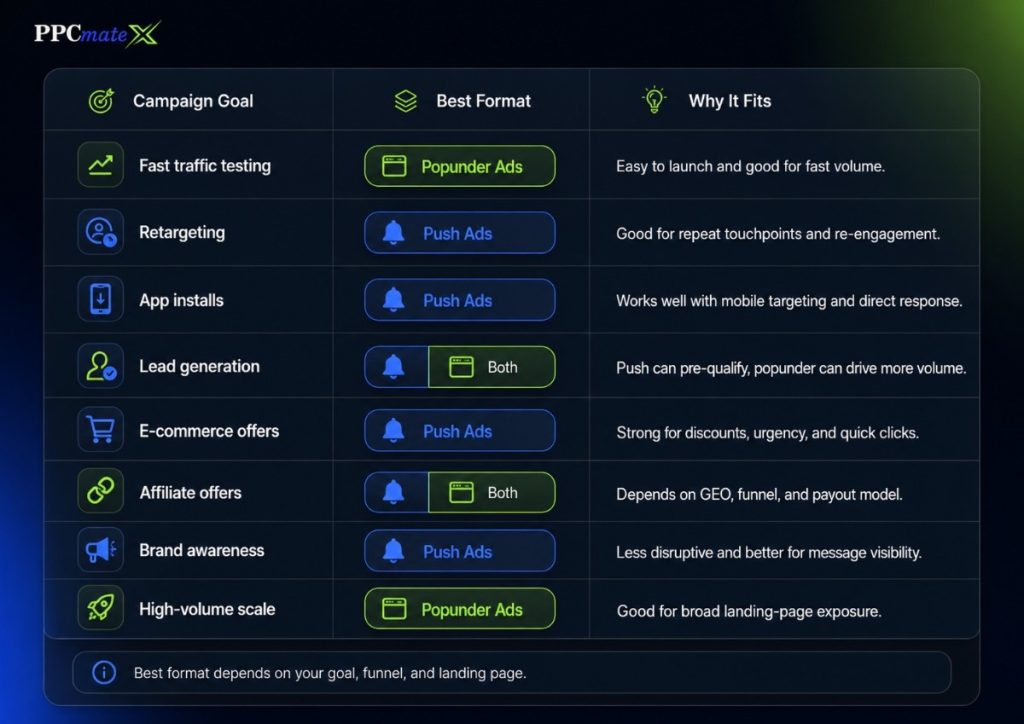
| Campaign goal | Better starting format | Reason |
| Fast traffic testing | Popunder | Easier to launch with one landing page |
| Retargeting | Push ads | Good for repeat touchpoints |
| App installs | Push ads | Works well with mobile targeting |
| Lead generation | Both | Push can pre-qualify; popunder can send volume |
| E-commerce offers | Push ads | Good for discounts and short product hooks |
| Affiliate offers | Both | Depends on payout, GEO, and funnel type |
| Brand awareness | Push ads | Less aggressive than full-page pop traffic |
| High-volume scale | Popunder | Can deliver broad landing page exposure |
How to Test Push and Popunder Ads Together
You do not need to choose only one format. Many advertisers test both and compare results.
Keep the test simple:
- Use separate campaigns for push and popunder traffic.
- Track CTR, CPC, CPA, CVR, bounce rate, and source quality.
- Start with controlled budgets before scaling.
- Block poor sources and increase bids on profitable ones.
- Compare results by GEO, device, OS, and time of day.
For mobile campaigns, mobile buying basics matter because device, OS, and connection type can change performance.
Common Mistakes to Avoid
Using the Same Funnel for Both Formats
Push users click from a short message. Popunder users land on a full page. The landing page and message should match the format.
Judging Too Early
Do not pause a campaign after only a few clicks. Wait until there is enough data to judge sources, devices, and placements.
Ignoring Frequency Caps
Too much exposure can hurt performance. Frequency caps help control waste and protect user experience.
Tracking Only Clicks
Clicks do not prove quality. Track conversions, CPA, ROAS, bounce rate, and source-level results.
Final Recommendation
Use push ads when you want fast, message-led engagement. Use popunder ads when you want high-volume landing page visits.
For most advertisers, the best approach is not “push or popunder.” It is testing both with clear goals. Push can help attract and re-engage users. Popunder can help scale landing page traffic. The right format is the one that reaches your CPA, ROAS, or lead quality target.
Ready to Launch Programmatic Ads With More Control?
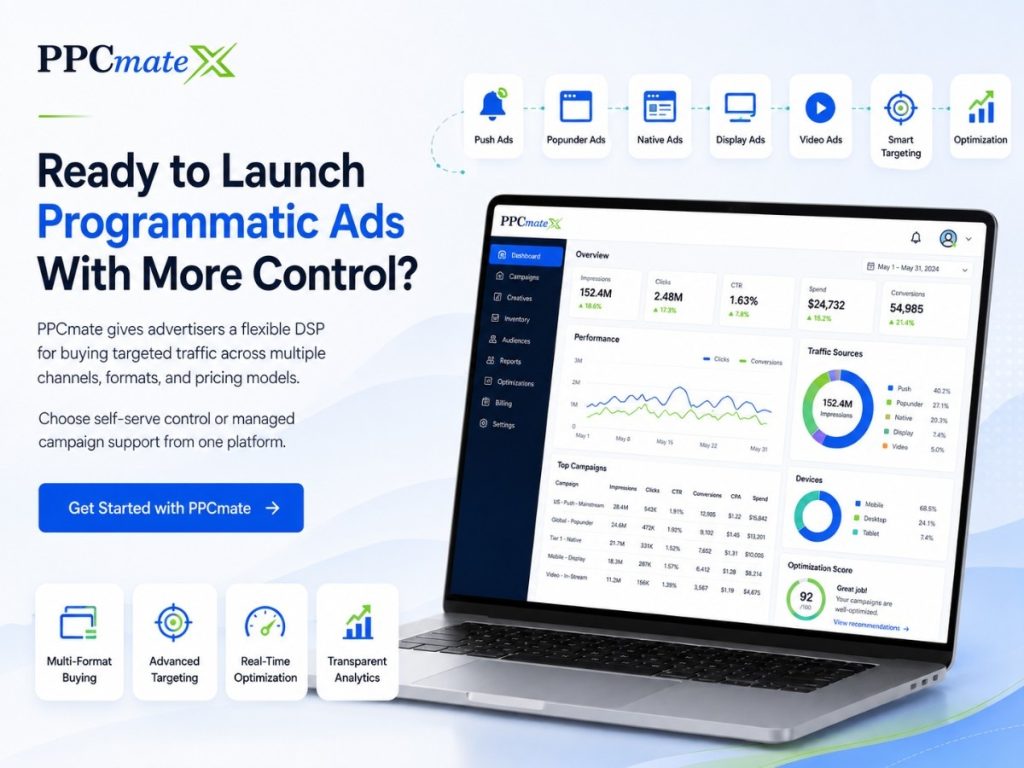
PPCmate gives advertisers a flexible DSP for buying targeted traffic across multiple channels, formats, and pricing models. Whether you want hands-on self-serve control or managed campaign support, PPCmate helps you launch, track, and optimize programmatic campaigns from one platform.
FAQs
Are push ads better than popunder ads?
Push ads are better for short messages, retargeting, and mobile engagement. Popunder ads are better for high-volume landing page traffic.
Are popunder ads good for beginners?
Yes. Popunder campaigns can be easier to launch because the landing page does most of the work. Beginners still need tracking, budget control, and source optimization.
Which format is cheaper?
It depends on GEO, device, source quality, and pricing model. Popunder traffic can be cost-effective at scale, while push ads can control cost through CPC bidding.
Can advertisers use both formats together?
Yes. Push ads and popunder ads can work together when each format has its own budget, tracking, and optimization plan.