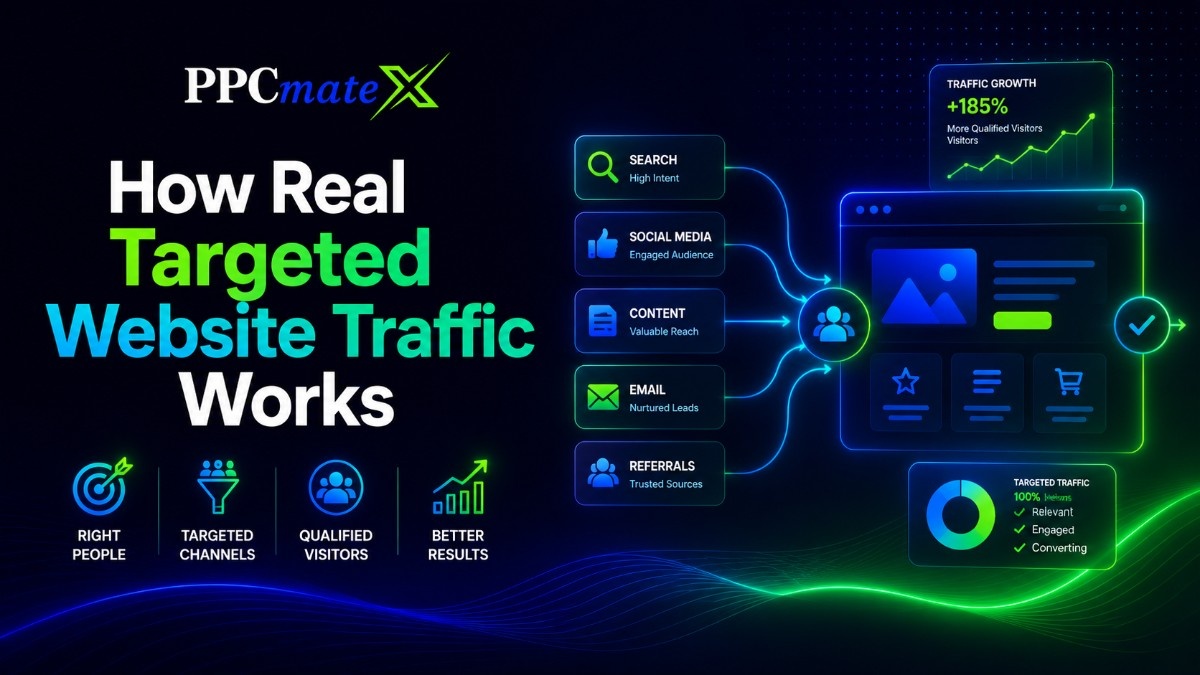
How Real Targeted Website Traffic Works
Real targeted website traffic gives advertisers a smarter way to bring the right visitors to a website, landing page, or offer. Instead of paying for random clicks, you can reach people based on location, device, language, ad format, and campaign goal, making each visit more useful and easier to measure.
When traffic comes from real users and trusted sources, advertisers can test offers with more confidence, track performance clearly, and improve results over time. This guide explains how real targeted website traffic works, what makes it different from low-quality visits, and how to use it for better campaign control.
What Real Targeted Website Traffic Means
Real targeted website traffic is paid or promoted traffic from users who can reasonably match your campaign. These users may be selected by location, device, language, content category, website source, or ad format.
A real visitor should show normal user signals. That does not mean every visitor will buy, sign up, or stay for a long time. It means the traffic should come from valid sources, not fake bots or automated hits.
Good targeted traffic usually includes:
- Clear source and campaign data
- Matching geo, device, and audience settings
- Trackable visits in analytics tools
- Normal click and session patterns
- Data that helps future optimization
How Targeted Website Traffic Is Delivered
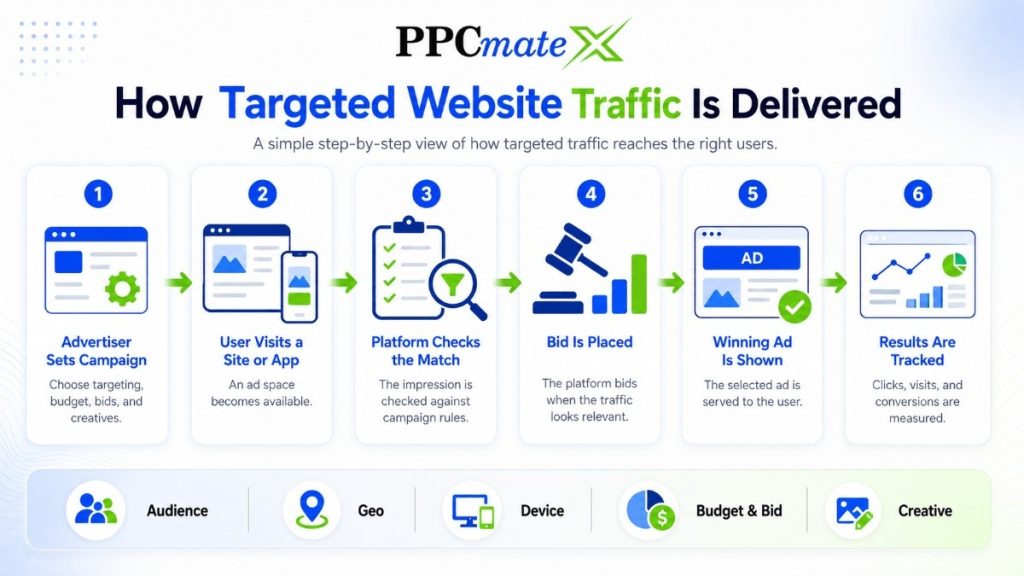
Targeted traffic is often delivered through programmatic advertising. Advertisers use a platform to set campaign rules, choose a budget, select formats, and reach users across websites, apps, and publisher inventory.
A platform built for DSP media buying helps advertisers manage this process from one place instead of buying placements one by one.
The Basic Delivery Flow
Before launch, the advertiser defines the campaign goal and audience. The platform then looks for ad opportunities that match those rules.
The process usually works like this:
- The advertiser sets targeting, budget, bids, and creatives.
- A user visits a website or app with available ad space.
- The platform checks whether that impression matches the campaign.
- A bid is placed when the traffic looks relevant.
- The winning ad is shown to the user.
- Clicks, visits, and conversions are tracked for review.
This is why the DSP buying process is useful for performance campaigns. It connects buying, targeting, reporting, and optimization in one workflow.
Where Real-Time Bidding Fits
Real-time bidding is the auction process behind many programmatic campaigns. It allows advertisers to compete for ad impressions as they become available.
With real-time auction buying, advertisers can avoid buying broad traffic blindly. They can bid based on campaign rules, expected value, and traffic quality.
Common Channels for Buying Targeted Traffic
Targeted website traffic can come from several paid channels. The right format depends on the offer, landing page, budget, and user action you want.
For visual awareness and retargeting, display traffic basics help advertisers understand banner placements, creative testing, and audience reach.
Common formats include:
- Display ads for visual reach and retargeting
- Push notification ads for fast user attention
- Native ads for content-style promotion
- Video ads for product education and brand recall
- Pop-under ads for high-volume campaign testing
Push campaigns can work well when the message is short and direct. Strong push ad traffic depends on clear copy, relevant offers, and focused targeting.
What Makes Website Traffic “Real”
Real traffic comes from users with genuine browsing behavior. Fake traffic often comes from bots, repeated automated actions, low-quality scripts, or traffic sources that do not match real user interest.
Advertisers should not judge traffic only by visit count. A campaign can show many sessions but still fail if users do not engage, convert, or match the offer.
Useful quality signals include:
- Source-level reporting
- Reasonable bounce and engagement patterns
- Clicks that match normal device behavior
- Conversions that can be tied to sources
- No sudden spikes from unknown locations
- Consistent results across analytics tools
How Targeting Controls Work
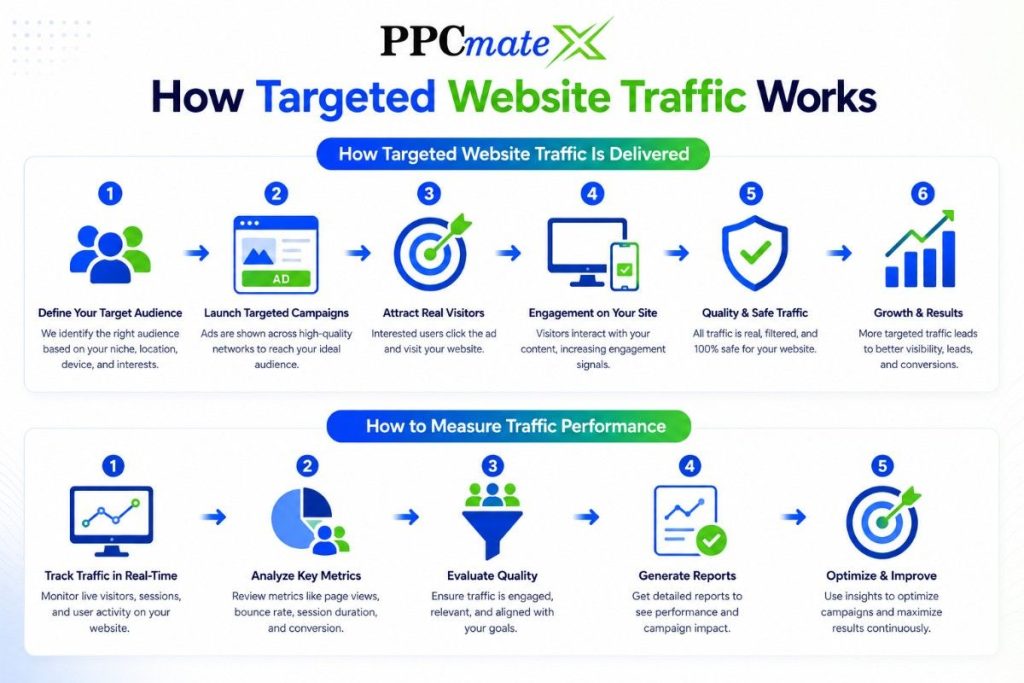
Targeting controls help advertisers narrow who sees an ad. The goal is to avoid paying for users who are unlikely to care about the offer.
Strong quality traffic signals come from combining several controls, not relying on one filter alone. Instead of applying filters randomly, follow a structured approach to build a more focused audience.
Step-by-Step Targeting Setup
- Start with location targeting
Choose the countries, regions, or cities where your audience is most likely to convert. Avoid targeting too many locations at once in the beginning. - Define device preferences
Select whether your campaign should run on desktop, mobile, or tablet. Match this with your landing page experience. - Set operating system filters
Narrow down users by OS such as Android, iOS, Windows, or macOS. This is useful for app installs or device-specific offers. - Choose language targeting
Align your ads with the language your audience understands. This improves engagement and reduces wasted clicks. - Apply category targeting
Focus on websites or apps that match your niche. For example, finance offers perform better on finance-related content. - Select specific sources
Use site, app, or source targeting to control where your ads appear. Over time, you can build a whitelist of high-performing sources. - Schedule your ads
Run campaigns during hours or days when your audience is most active. This helps improve efficiency and reduce unnecessary spend. - Set frequency caps
Limit how often the same user sees your ad. This prevents overexposure and keeps your campaign fresh. - Use retargeting when possible
Reach users who have already visited your site or interacted with your ads. These users are more likely to convert.
By combining these targeting steps, advertisers can build campaigns that reach the right users at the right time, improving both traffic quality and overall performance.
Traffic Quality vs Traffic Volume
High traffic volume is not always better. A smaller campaign with stronger targeting can produce better data than a large campaign with weak controls.
| Focus Area | Volume-First Traffic | Targeted Quality Traffic |
| Main goal | More visits | Better-fit visitors |
| Targeting | Broad | Focused |
| Tracking | Basic sessions | Source and conversion data |
| Optimization | Limited | Bid, source, and creative changes |
| Risk | Higher waste | Better budget control |
| Best for | Awareness tests | Performance campaigns |
Advertisers buying high-quality traffic buying should focus on match quality, not only the lowest visit cost.
How to Measure Traffic Performance
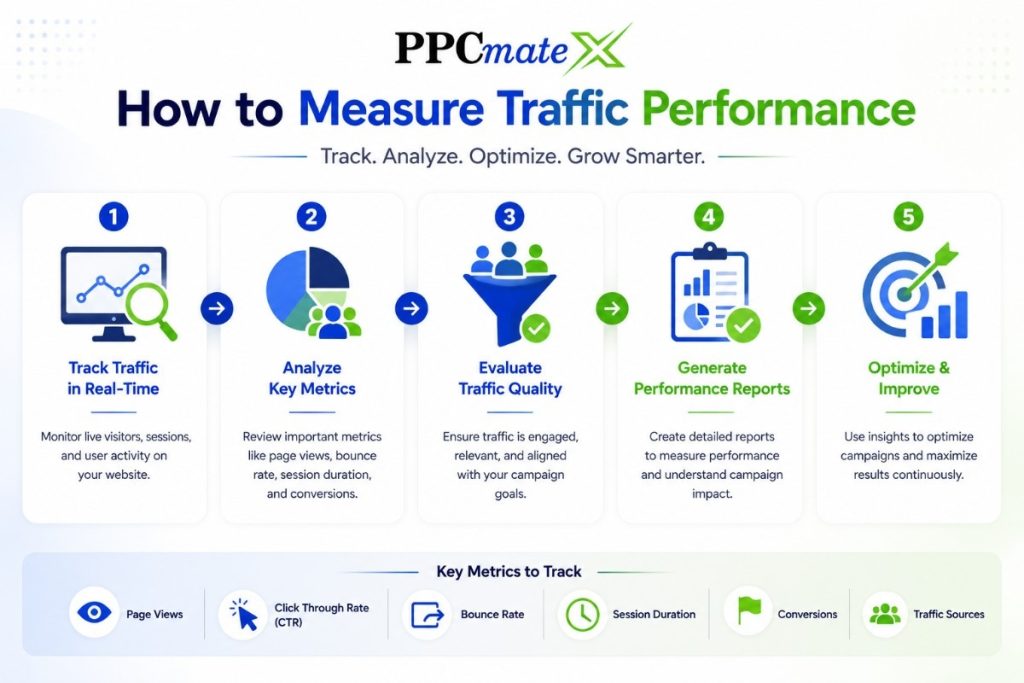
- Measure post-click performance: Focus on what happens after the click, not just the visit count. Prioritize actions that impact business results like leads, sales, or sign-ups.
- Use tracking tools: Connect traffic sources to outcomes using reliable systems:
- Google Analytics: Track sessions, behavior, and conversions
- UTM tags: Identify campaign, source, and medium
- Tracking pixels: Capture user actions on landing pages
- Postback tracking: Send conversion data back to ad platforms
These tools help you decide which sources to scale, pause, or block.
- Monitor key metrics: Track performance indicators that show traffic quality:
- Impressions: How often your ad is shown
- Clicks: Number of user interactions
- CTR: Click-through rate to measure engagement
- CPC: Cost per click to control spend
- CPM: Cost per thousand impressions for reach
- Landing page views: Confirm page load success
- Conversion rate: Measure action completion
- CPA: Cost per action for efficiency
- ROAS: Return on ad spend for profitability
- Source-level profit/loss: Evaluate each traffic source
- Track conversions for performance: Make conversion tracking a priority:
- Focus on meaningful actions like purchases or sign-ups
- Avoid optimizing for cheap but low-quality clicks
- Improve campaign decisions with real performance data
How to Improve Campaign Results
Targeted traffic usually improves through testing. The first campaign should collect data, not prove everything at once.
Good campaign optimization habits help advertisers adjust spend based on real results instead of guessing.
Use these simple improvement actions:
- Start with focused geos and devices.
- Test two or three creatives at a time.
- Separate campaigns by format when possible.
- Review source data often.
- Block weak sources early.
- Raise bids on sources that convert.
- Use frequency caps to limit wasted impressions.
- Match the landing page to the ad promise.
- Track conversions before scaling spend.
For display campaigns, display bidding control helps advertisers manage CPM, budget, and spend with more discipline.
Common Mistakes to Avoid
Many advertisers lose budget because they buy traffic before setting a clear goal. Traffic should support a measurable action, not just fill an analytics report.
Avoid these common mistakes:
- Buying generic traffic without audience rules
- Judging success only by total visits
- Launching without conversion tracking
- Targeting too many countries at once
- Using one landing page for every audience
- Ignoring source-level performance
- Scaling before quality is proven
- Choosing cheap clicks over useful visitors
The best campaigns start narrow, collect clean data, and scale only when the numbers support it.
Ready to Buy Real Website Visitors With More Control?
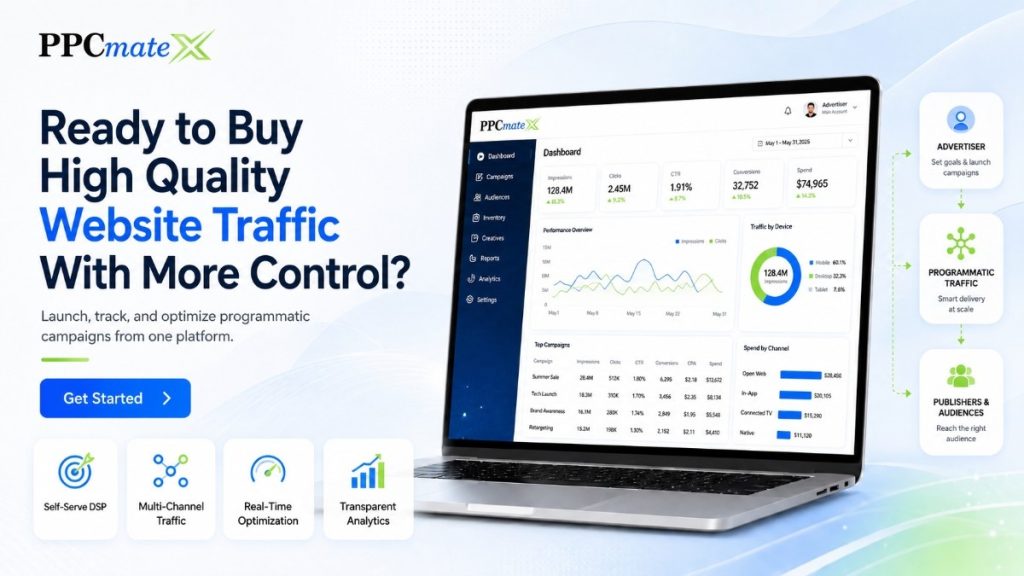
PPCmate gives advertisers a flexible platform for buying real, targeted website traffic through programmatic ads, display ads, push notifications, and other high-performing ad formats. Whether you want to drive more visitors to a landing page, promote an offer, or scale a performance campaign, PPCmate helps you launch, track, and optimize traffic campaigns from one place.
Advertisers who want more control can compare formats, test audiences, review source data, and improve campaign quality over time. PPCmate’s visitor buying options are built for campaigns that need both traffic and performance visibility.
FAQs
What is real targeted website traffic?
Real targeted website traffic means visits from actual users who match your campaign settings. These settings may include location, device, language, interest, website category, or ad format.
Is buying real website traffic safe?
Buying traffic can be safe when it comes from transparent sources and includes tracking, targeting, and quality controls. The risk is higher when a provider sells broad traffic with no clear source data.
How do I know if traffic is real?
Look for normal user behavior, clear source reporting, trackable sessions, and conversion data. Sudden spikes, strange locations, and no engagement can be warning signs.
Does targeted traffic guarantee sales?
No traffic source can guarantee sales by itself. Sales depend on the offer, landing page, price, audience match, trust signals, and follow-up process.
Which ad format is best for targeted website traffic?
There is no single best format for every campaign. Display can support awareness and retargeting, push can drive fast clicks, native can support content offers, and pop-under can help with volume testing.
Can targeted traffic help with SEO?
Paid traffic can support visibility, content testing, and user data, but it does not replace SEO. Search rankings depend on many factors, including content quality, technical health, relevance, and authority.
What should I track first?
Start with visits, source, cost, clicks, and conversions. Once the campaign has enough data, review CPA, ROAS, source quality, and landing page performance.
When should I scale a traffic campaign?
Scale only after you know which sources, geos, devices, creatives, and landing pages are working. Increase spend gradually so quality stays stable as volume grows.