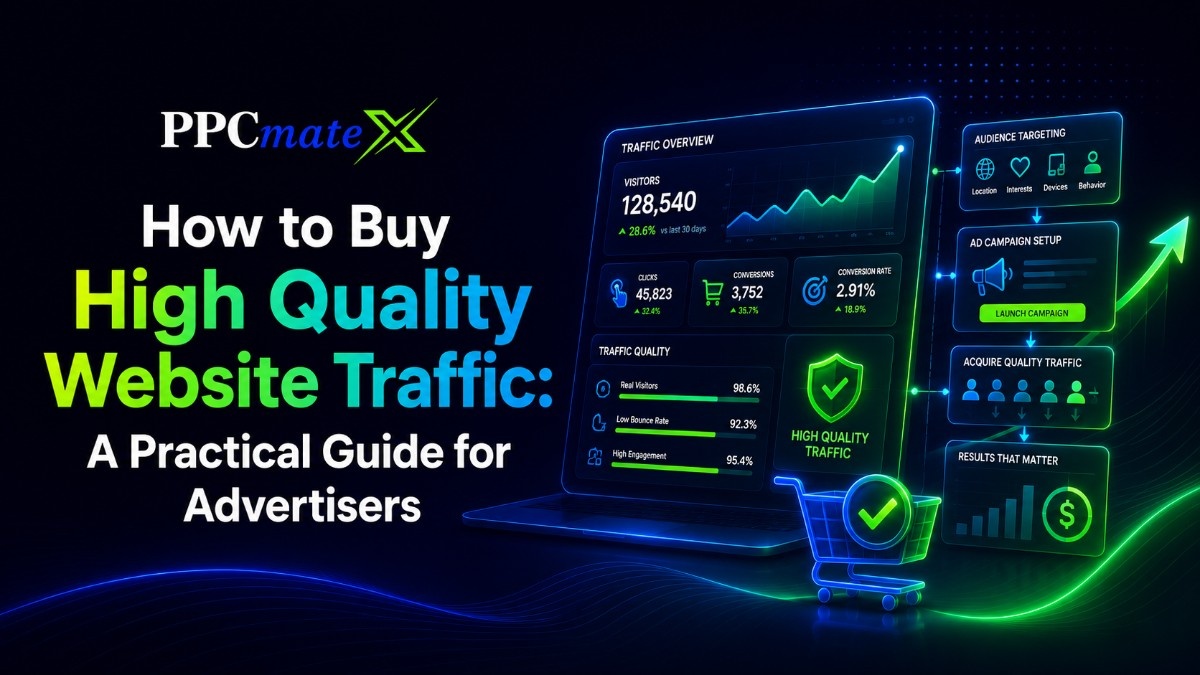
Buying high quality website traffic does not mean paying for random visits. It means buying access to users who match your offer, land on the right page, and have a real chance to take action.
For advertisers, media buyers, affiliates, e-commerce teams, and agencies, the safest approach is controlled paid traffic buying. That means using targeting, bidding, fraud protection, tracking, and optimization instead of blind traffic packages.
Key Takeaways
High-quality website traffic is not judged by visits alone. It is judged by audience fit, source quality, engagement, conversions, and cost per result.
Important points to remember:
- Buy traffic from platforms that offer targeting and reporting.
- Match each campaign to one clear goal.
- Track conversions before scaling spend.
- Review performance by source, device, geo, and time.
- Pause weak traffic before it drains the budget.
- Scale only after stable conversion data appears.
What Is High Quality Website Traffic?
High quality website traffic comes from users who are relevant to your campaign goal. These users may click an ad, visit a landing page, submit a form, install an app, buy a product, or return through retargeting.
A strong traffic source should give advertisers control over where the budget goes. A programmatic DSP setup helps media buyers manage targeting, bids, budgets, creatives, and results from one place.
High-quality traffic usually has these signs:
- The audience matches the offer.
- The traffic source is visible and measurable.
- Clicks come from real user interest.
- The landing page matches the ad message.
- Engagement and conversion data can be tracked.
- Weak sources can be paused or blocked.
How Buying Website Traffic Works
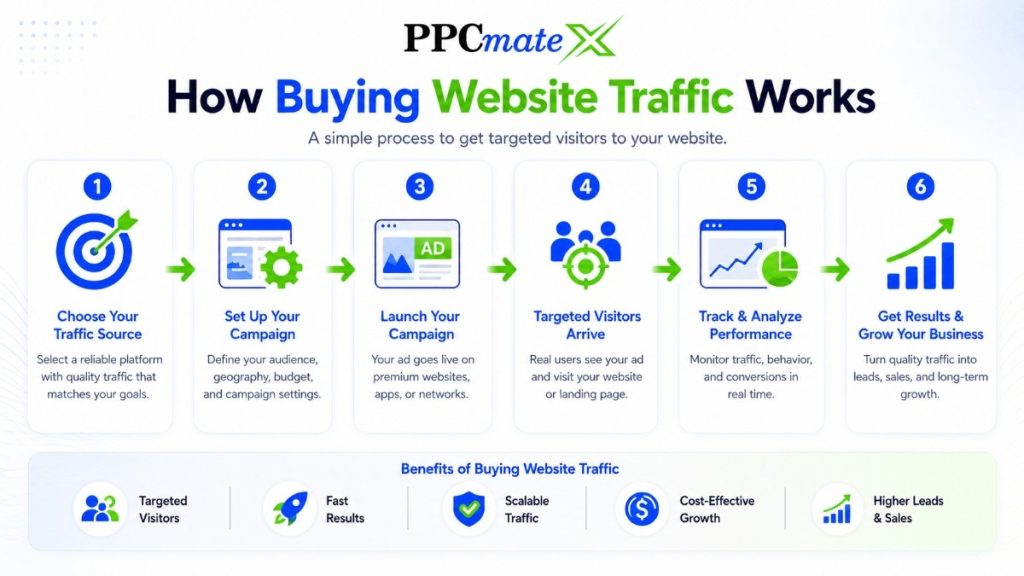
When advertisers buy website traffic, they pay to send users from ad placements to a website, landing page, app page, offer page, or lead form. The advertiser sets the campaign goal, audience, budget, bid, creative, and tracking rules.
A platform then matches the campaign with available ad placements. With DSP traffic buying, advertisers can manage campaigns across many sources instead of buying from one publisher at a time.
Common paid traffic channels include:
| Channel | Best For | Quality Control Needed |
| Display ads | Reach, retargeting, product offers | Creative, placement, source quality |
| Push ads | Alerts, deals, app installs, lead forms | Message clarity, frequency, targeting |
| Native ads | Content-style promotion and discovery | Landing page fit and audience intent |
| Pop-under ads | High-volume testing and broad reach | Source filtering and conversion tracking |
| Video ads | Product demos, awareness, app previews | View quality, placement, and message match |
Start With One Clear Campaign Goal
Before you buy high quality website traffic, decide what the campaign should achieve. A campaign built for sales should not be measured the same way as a campaign built for reach.
Choose one goal first. This makes bidding, targeting, and optimization easier to manage.
Common goals include:
- Website visits
- Lead generation
- Online sales
- App installs
- Affiliate offer testing
- E-commerce product promotion
- Retargeting past visitors
- Brand or content discovery
A clear goal also helps you choose the right ad format. For example, display ads can support retargeting and visual offers, while push ads can work well for short, direct messages.
Use Targeting to Improve Traffic Quality
Targeting helps advertisers avoid paying for users who are unlikely to act. It does not guarantee conversions, but it gives the campaign a better starting point.
With a centralized ad platform, advertisers can control audience settings across devices, locations, and formats. This is useful when testing several geos or traffic sources at the same time.
Useful targeting options include:
- Country, region, or city
- Device type
- Operating system
- Browser
- Language
- Connection type
- Carrier or ISP
- Website or app source
- Time of day
- Retargeting audience
- Whitelist or blacklist
Do not make the first test too narrow. Start with the most important filters, collect data, then refine based on actual performance.
Choose the Right Bidding Model
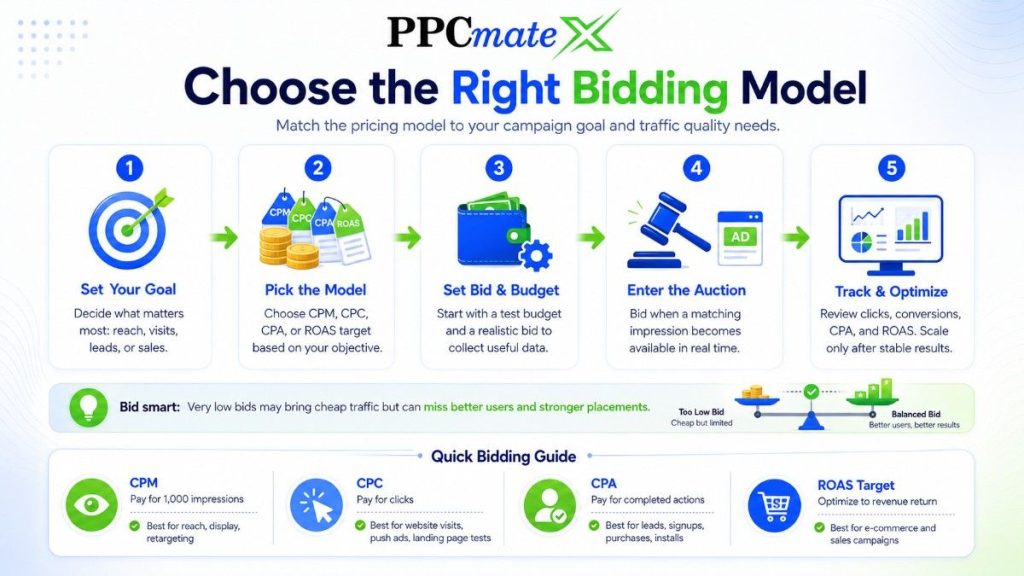
Bidding affects both traffic volume and traffic quality. A very low bid may bring cheap impressions or clicks, but it may also miss better users and stronger placements.
In real-time auction buying, advertisers can bid when a matching impression becomes available. This gives more control than buying broad traffic without source or audience rules.
Use this simple guide:
| Pricing Model | What You Pay For | Best For |
| CPM | 1,000 impressions | Reach, display, retargeting, pop-under testing |
| CPC | Clicks | Website visits, push ads, landing page tests |
| CPA | Completed actions | Leads, signups, purchases, installs |
| ROAS target | Revenue return | E-commerce and sales campaigns |
Start with a test budget that can collect enough clicks and conversions. Increase spend only when the source, device, geo, or creative shows stable results.
Protect Budget With Fraud Checks and Source Filtering
Not all traffic has the same value. Some sources may bring clicks without real interest, while others may bring fewer clicks but better leads or sales.
Traffic quality improves when advertisers review source-level results. A DSP optimization process helps decide what to pause, block, test, or scale based on campaign data.
Good traffic protection includes:
- Conversion tracking from the start
- Source-level reporting
- Postback or pixel tracking
- Fraud and invalid traffic filtering
- Blacklists for weak sources
- Whitelists for proven sources
- Frequency controls
- Landing page quality checks
Cheap traffic is not useful if it creates fake activity, low engagement, or poor conversion data. The goal is not the lowest visit cost. The goal is profitable traffic.
Track the Metrics That Show Real Quality
Clicks can show interest, but they do not prove traffic quality. Conversions, CPA, ROAS, and source performance show whether the traffic is useful.
For advertisers running traffic that converts, tracking should connect ad spend to real actions. Without tracking, it is hard to know which traffic sources deserve more budget.
Important metrics include:
| Metric | What It Shows |
| Impressions | How often the ad was shown |
| Clicks | How many users clicked |
| CTR | How strong the ad message is |
| CPC | Average cost per click |
| Conversion rate | How many clicks became actions |
| CPA | Cost per lead, sale, install, or signup |
| ROAS | Revenue compared with ad spend |
| Bounce rate | Whether users leave quickly |
| Source performance | Which placements work or waste budget |
| Device performance | How mobile, desktop, and tablet compare |
A campaign may have a high CTR but poor conversions. In that case, check the offer, landing page, source quality, and message match before increasing budget.
Match the Format to the Offer
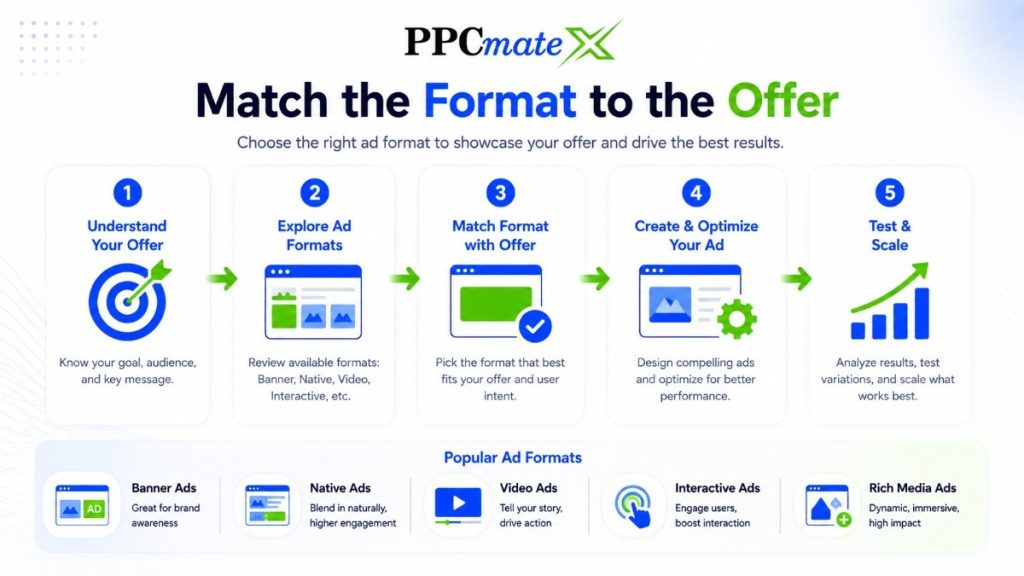
Different ad formats bring different types of attention. The best format depends on the offer, funnel stage, creative assets, and campaign goal.
For visual offers, display traffic campaigns can help advertisers promote products, deals, lead forms, and retargeting messages across websites and apps.
For short, urgent messages, push notification campaigns can work well because the format is direct and action-focused.
Use this format guide:
| Format | Use When |
| Display | You need visual reach, retargeting, or product promotion |
| Push | The offer is simple, urgent, and easy to understand |
| Native | Users need more context before clicking |
| Pop-under | You want high-volume testing with strong filtering |
| Video | The product needs motion, demo, or explanation |
One format does not fit every campaign. Test formats separately when possible so performance is easier to read.
Optimize Before You Scale
Optimization means spending more on what works and less on what wastes budget. Do not scale just because clicks are cheap.
Start by reviewing source, device, geo, OS, browser, creative, and landing page data. Then make small changes based on clear patterns.
Useful optimization actions include:
- Pause sources with spend but no conversions.
- Increase bids slowly on strong sources.
- Separate mobile and desktop campaigns.
- Test one creative change at a time.
- Improve landing page speed and message match.
- Use dayparting when certain hours perform better.
- Build whitelists from proven traffic sources.
For display campaigns, bidding strategy controllings help advertisers manage CPM, pacing, budget limits, and conversion-based decisions.
Common Mistakes to Avoid
Many advertisers lose budget because they buy traffic before the campaign is ready. Traffic can only perform when the offer, tracking, targeting, and landing page are aligned.
Avoid these mistakes:
- Buying traffic without a clear goal
- Judging quality by visits only
- Ignoring conversion tracking
- Using the same landing page for every source
- Targeting too broadly for too long
- Blocking sources before enough data is collected
- Scaling after clicks but before conversions
- Choosing traffic only because it is cheap
Good traffic buying is a testing process. The stronger the data, the easier it is to decide what to keep, pause, or scale.
Ready to Buy High Quality Website Traffic With More Control?
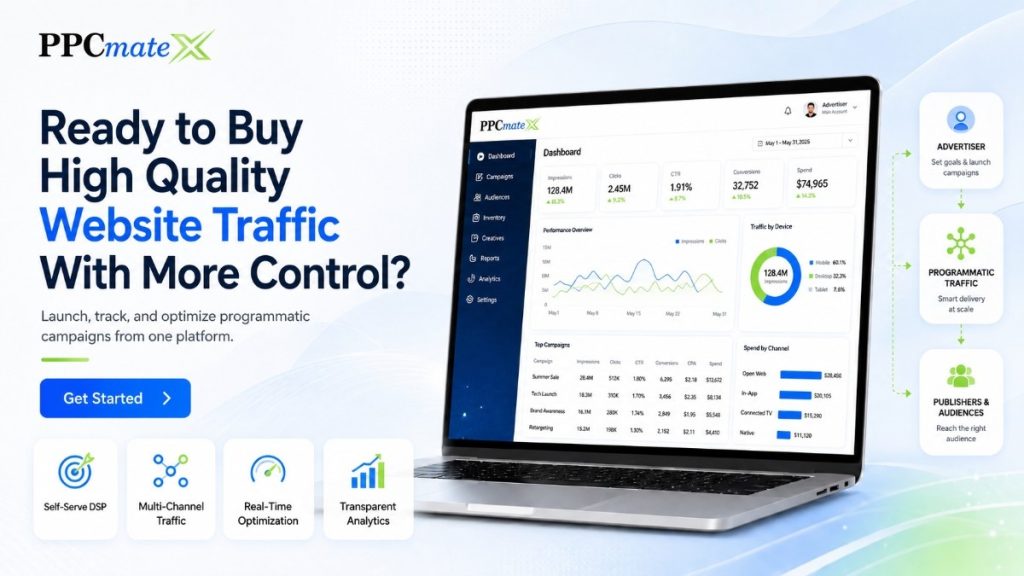
PPCmate gives advertisers a flexible platform for buying targeted, high-quality website traffic through programmatic ads, display campaigns, push notifications, and other performance-focused ad formats.
Whether you want to reach the right audience, improve traffic quality, promote an offer, or scale a conversion-focused campaign, PPCmate helps you launch, track, protect, and optimize your traffic from one place.
FAQs
Is it safe to buy high quality website traffic?
Yes, if you buy traffic through a platform that offers targeting, tracking, reporting, and traffic quality controls. Avoid blind traffic packages that do not show where visitors come from or how they perform.
What is the best way to buy website traffic?
The best way is to run controlled paid campaigns through a DSP or ad platform. This gives advertisers more control over targeting, bids, budgets, sources, and optimization.
How do I know if website traffic is high quality?
Check conversion rate, CPA, ROAS, bounce rate, time on site, source performance, and device performance. Good traffic should support the campaign goal, not just increase visitor numbers.
Should I choose CPC or CPM traffic?
Use CPC when the main goal is website visits or landing page testing. Use CPM when you want reach, display exposure, retargeting, or high-volume testing.
Can paid website traffic help e-commerce campaigns?
Yes. E-commerce advertisers can use paid traffic for product launches, flash sales, coupons, cart recovery, and retargeting. The landing page should match the ad offer clearly.
Is cheap website traffic worth it?
Cheap traffic can be useful for testing only if it is real, trackable, and controllable. If it does not convert or creates poor data, it can waste budget quickly.
Does PPCmate help advertisers buy website traffic?
Yes. PPCmate helps advertisers buy website traffic across formats such as display, push notifications, native, pop-under, and video, with targeting, reporting, fraud protection, and optimization tools.