Real-time bidding, or RTB, is an automated auction process used in programmatic advertising.
It lets advertisers bid on individual ad impressions as users load websites, open apps, or view digital content. The auction happens in milliseconds, before the ad appears.
In DSP advertising, RTB helps advertisers decide which impressions are worth buying, how much to bid, and which users to reach based on campaign goals.
Key Takeaways
- RTB lets advertisers buy ad impressions one at a time through live auctions.
- A DSP evaluates each impression before deciding whether to bid.
- RTB helps advertisers control spend, targeting, traffic quality, and campaign performance.
- The main platforms involved are DSPs, SSPs, and ad exchanges.
- Strong RTB performance depends on targeting, bid strategy, tracking, and ongoing optimization.
What Is Real-Time Bidding?
Real-time bidding is a programmatic buying method where ad inventory is bought and sold through instant auctions.
Instead of buying a fixed ad placement in advance, advertisers bid only when a matching impression becomes available.
This makes automated media buying faster, more flexible, and easier to optimize.
In simple terms:
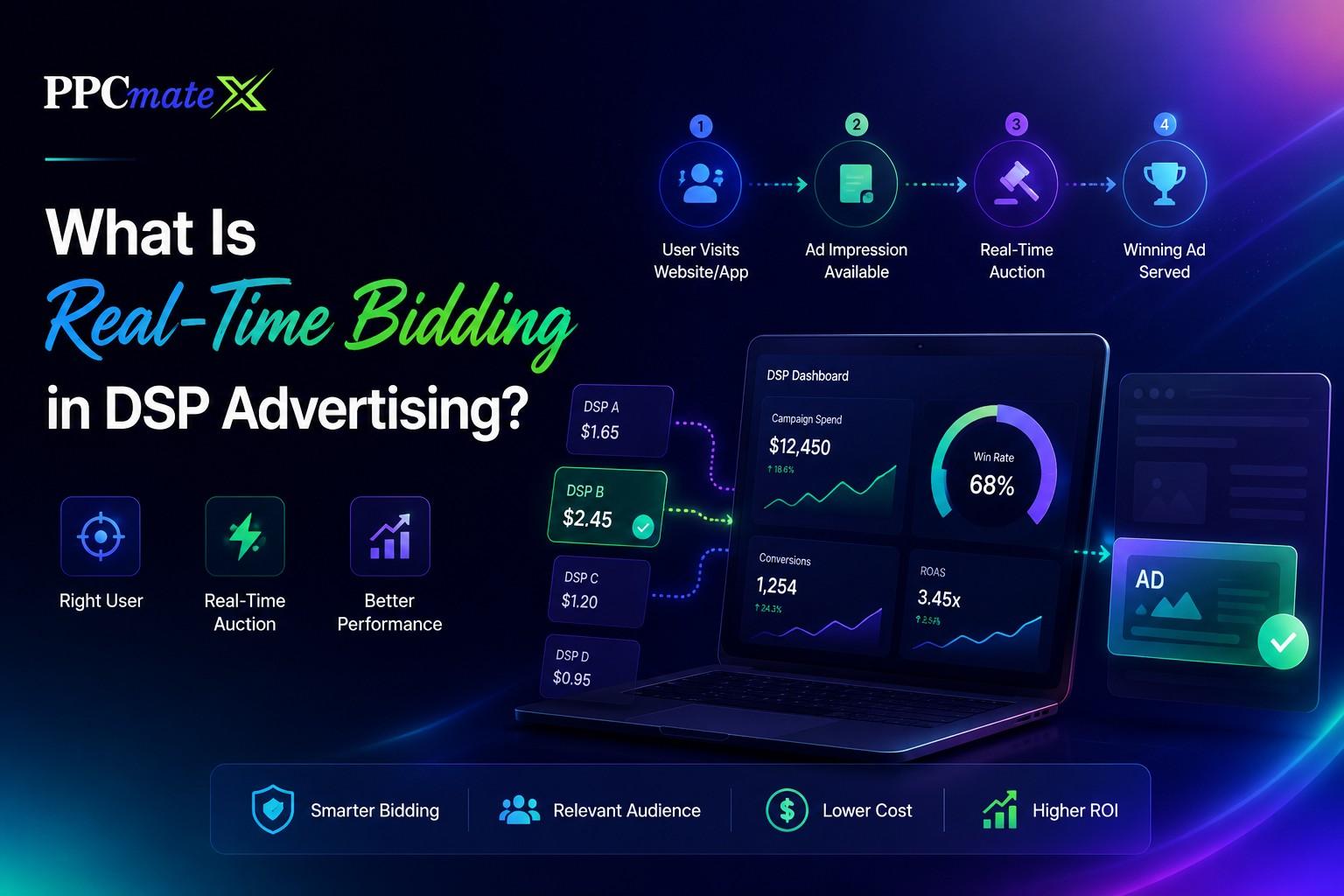
- A user visits a website or app.
- An ad space becomes available.
- Advertisers compete for that impression.
- The winning ad is shown almost instantly.
How RTB Works in DSP Advertising
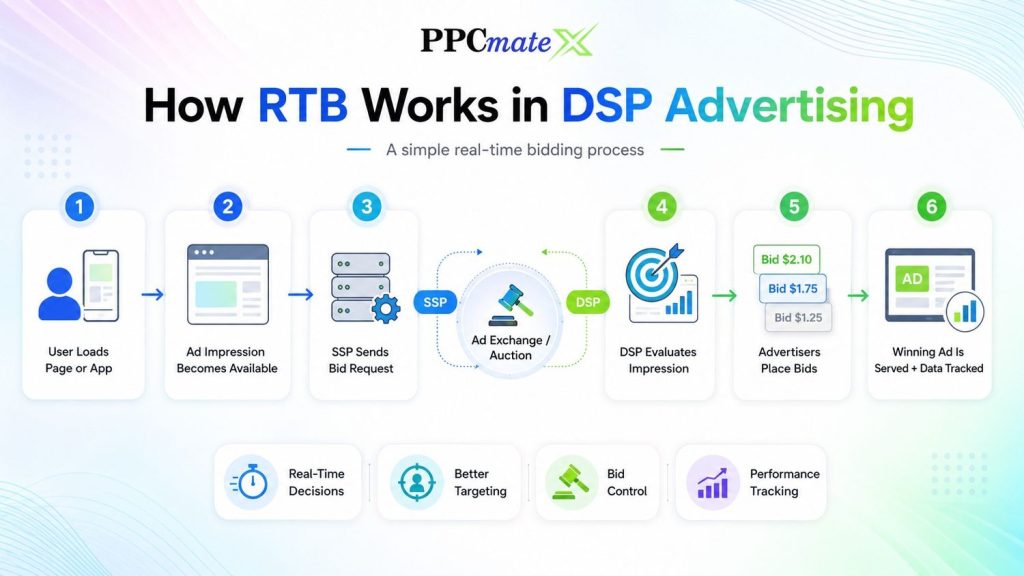
A DSP is the platform advertisers use to join RTB auctions.
The DSP checks each ad opportunity against campaign rules. If the impression matches the campaign, the DSP can place a bid.
RTB Auction Flow
| Step | What Happens | Why It Matters |
| 1. User loads content | A website or app opens | An ad impression becomes available |
| 2. SSP sends request | Publisher inventory enters auction | Buyers receive impression details |
| 3. DSP evaluates | DSP checks targeting and value | Low-quality impressions can be skipped |
| 4. Bid is placed | DSP submits a price | Advertiser competes for the impression |
| 5. Winner is selected | Highest eligible bid usually wins | The ad is served to the user |
| 6. Data is tracked | Clicks, conversions, and spend are recorded | Campaigns can be optimized |
This full process happens in milliseconds. The user sees the page load normally.
RTB vs Programmatic Advertising
RTB and programmatic advertising are related, but they are not the same.
Programmatic advertising is the broader system of automated ad buying. RTB is one way programmatic ads are bought.
| Term | Meaning | Example |
| Programmatic advertising | Automated buying and selling of digital ads | Buying display, native, video, push, or pop-under ads through technology |
| Real-time bidding | Live auction for each impression | DSP bids when a matching user opens a page or app |
| Direct programmatic | Automated buying with fixed terms | Private deal or guaranteed placement |
RTB is popular because it gives advertisers more control over each impression instead of buying broad traffic packages.
What Does a DSP Evaluate Before Bidding?
A DSP does not bid on every impression. It checks the value of each ad opportunity before spending budget.
A strong DSP bidding setup helps advertisers avoid weak impressions and focus on traffic that matches the campaign goal.
1. Campaign Match
The DSP first checks if the impression fits the campaign rules.
It looks at:
- Target country, region, or city
- Device type
- Operating system
- Browser or app
- Language
- Ad format
If the impression does not match the campaign settings, the DSP skips it.
2. User and Context Signals
Next, the DSP reviews where the impression is coming from and who may see the ad.
It may check:
- Website or app category
- Traffic source
- Placement type
- Time of day
- User behavior or audience data, when available
This helps the DSP decide if the impression is relevant.
3. Bid Floor and Auction Price
The DSP checks the minimum price needed to enter the auction.
It compares the bid floor with the advertiser’s bid limit and expected value. This is a key part of real-time auction logic because the DSP must decide whether the impression is worth the price.
If the price is too high for the campaign goal, the DSP may not bid.
4. Budget and Frequency Rules
The DSP checks whether the campaign still has budget available.
It also reviews:
- Daily budget
- Total budget
- Pacing rules
- Frequency caps
This prevents overspending and avoids showing the same ad too often.
5. Expected Performance
Finally, the DSP estimates whether the impression is likely to help the campaign.
It may use past data such as:
- Click rate
- Conversion rate
- Source quality
- CPA or ROAS performance
- Previous campaign results
If the impression looks valuable, the DSP places a bid. If not, it skips the auction.
RTB vs Direct Ad Buying
RTB gives advertisers more flexibility than manual or fixed media buying.
| Area | RTB Buying | Direct Buying |
| Buying method | Automated auction | Manual or fixed agreement |
| Pricing | Changes by impression | Often fixed |
| Control | High targeting control | Depends on publisher deal |
| Speed | Real-time | Slower setup |
| Optimization | Live adjustments | Limited during campaign |
| Best for | Testing, scaling, performance buying | Premium placements or fixed sponsorships |
Direct buying can still be useful. But RTB is better when advertisers need fast testing, source-level data, and flexible optimization.
Why RTB Matters for Advertisers
RTB helps advertisers make smarter buying decisions.
Instead of paying the same price for every impression, advertisers can value each opportunity based on targeting, traffic quality, and expected results.
Main benefits include:
- Better control over bids and budgets
- Faster campaign launch
- More precise audience targeting
- Real-time performance data
- Easier creative testing
- Source-level optimization
- Reduced wasted spend
- Access to multiple formats and traffic sources
This matters for performance campaigns where CPA, ROAS, CTR, and conversion quality can change by geo, device, source, and time of day.
Important RTB Metrics to Track
RTB campaigns need regular monitoring. Cheap impressions are not always good impressions.
| Metric | What It Means | Why It Matters |
| CPM | Cost per 1,000 impressions | Shows media cost |
| CTR | Click-through rate | Shows ad engagement |
| CPC | Cost per click | Helps judge traffic cost |
| CPA | Cost per action | Measures conversion efficiency |
| ROAS | Revenue from ad spend | Measures return |
| Win rate | Auctions won vs bids placed | Shows bid competitiveness |
| Bid loss reason | Why bids failed | Helps fix delivery problems |
| Conversion rate | Actions from clicks or visits | Shows traffic quality |
Advertisers should judge RTB by outcomes, not only by low CPM.
Common RTB Challenges
RTB gives advertisers control, but it still needs careful management.
Common issues include:
- Bidding too broadly
- Weak tracking setup
- Low-quality sources
- Poor creative match
- High frequency
- Low win rate
- Bids below publisher floors
- Invalid clicks or bot traffic
- Landing pages that do not match the offer
Fraud protection, whitelists, blacklists, and source-level reporting help reduce risk. But advertisers still need to review campaign data and adjust settings.
How to Optimize RTB Campaigns
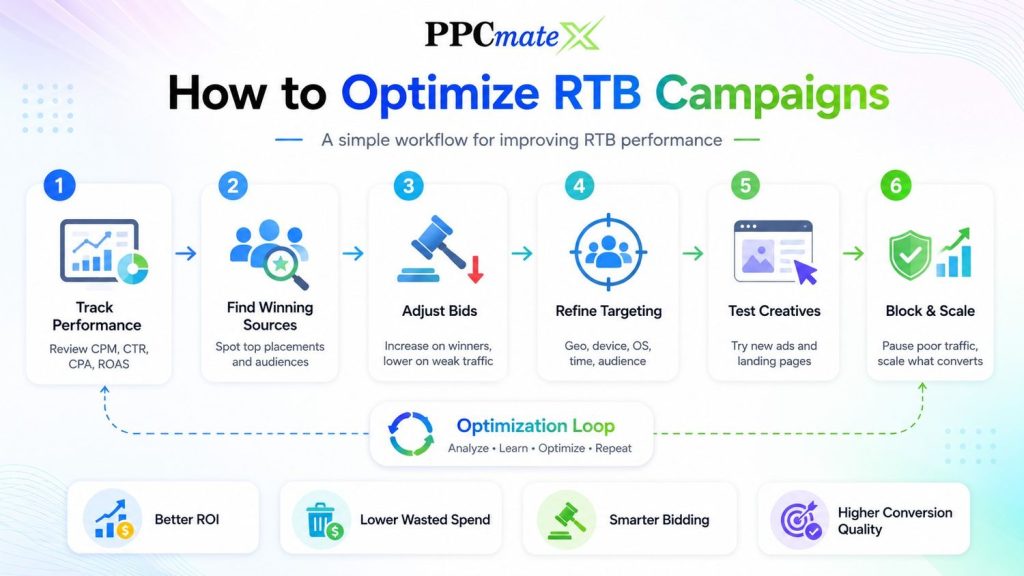
RTB optimization is about improving traffic quality over time.
Start with clear campaign rules. Then use live data to decide what to scale, pause, block, or adjust.
Practical actions include:
- Increase bids on sources that convert
- Lower bids on weak segments
- Pause poor-performing placements
- Test new creatives
- Use frequency caps
- Separate mobile and desktop traffic
- Review geo and OS performance
- Block suspicious sources
- Build whitelists from proven traffic
For mobile campaigns, mobile buying signals like device, OS, connection type, and app environment can strongly affect results.
RTB and Ad Formats
RTB can support several programmatic ad formats, depending on the DSP and available inventory.
Advertisers may use RTB to buy:
- Display ads
- Native ads
- Video ads
- Push notification ads
- Pop-under ads
For example, native campaign traffic can work well when users need more context before converting. Push and pop-under formats may work better for fast testing, direct response, or high-volume campaigns.
Is RTB Right for Every Advertiser?
RTB is useful for advertisers who want control, testing speed, and performance data.
It is a strong fit for:
- Media buyers
- Affiliate marketers
- E-commerce teams
- Agencies
- App advertisers
- Lead generation teams
- Brands running retargeting or display campaigns
RTB works best when advertisers have clear goals, tracking links, conversion data, budget limits, and a plan for optimization.
Ready to Launch Programmatic Ads With More Control?
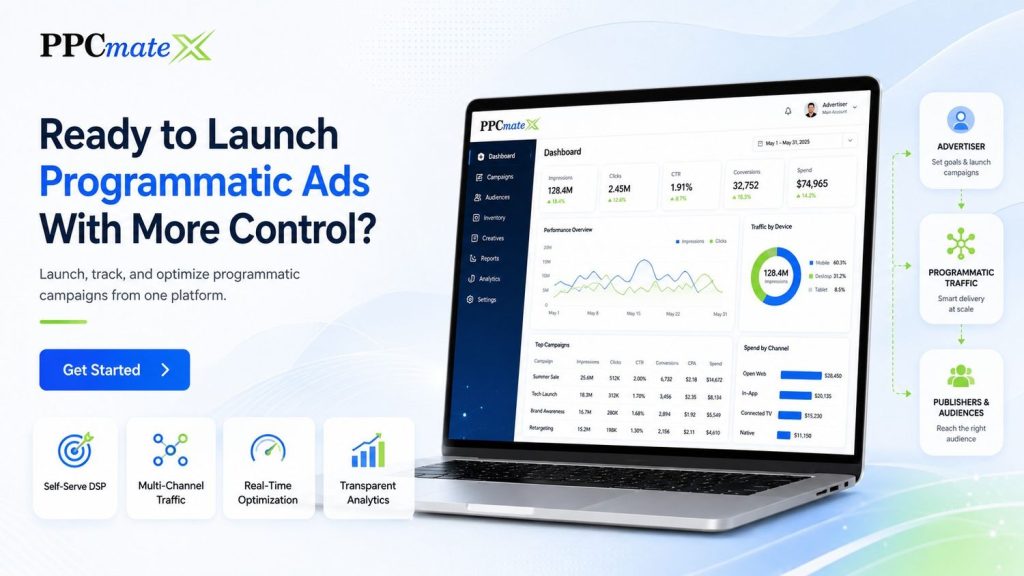
PPCmate gives advertisers a flexible DSP for buying targeted traffic across multiple channels, formats, and pricing models. Whether you want hands-on self-serve control or managed campaign support, PPCmate helps you launch, track, and optimize programmatic campaigns from one platform.
FAQs
Is RTB the same as a DSP?
No. RTB is the auction method. A DSP is the platform advertisers use to join RTB auctions and manage campaigns.
How fast does real-time bidding happen?
RTB usually happens in milliseconds while a page, app, or ad placement loads.
Does the highest bid always win?
The highest eligible bid often wins, but auction rules, floor prices, creative approval, targeting, and quality controls can also affect the result.
Can RTB reduce wasted ad spend?
Yes. RTB can reduce waste by letting advertisers bid only on impressions that match their targeting, budget, and campaign goals.
What should advertisers prepare before using RTB?
Advertisers should prepare creatives, landing pages, tracking links, target geos, bid limits, budget caps, and clear CPA or ROAS targets.