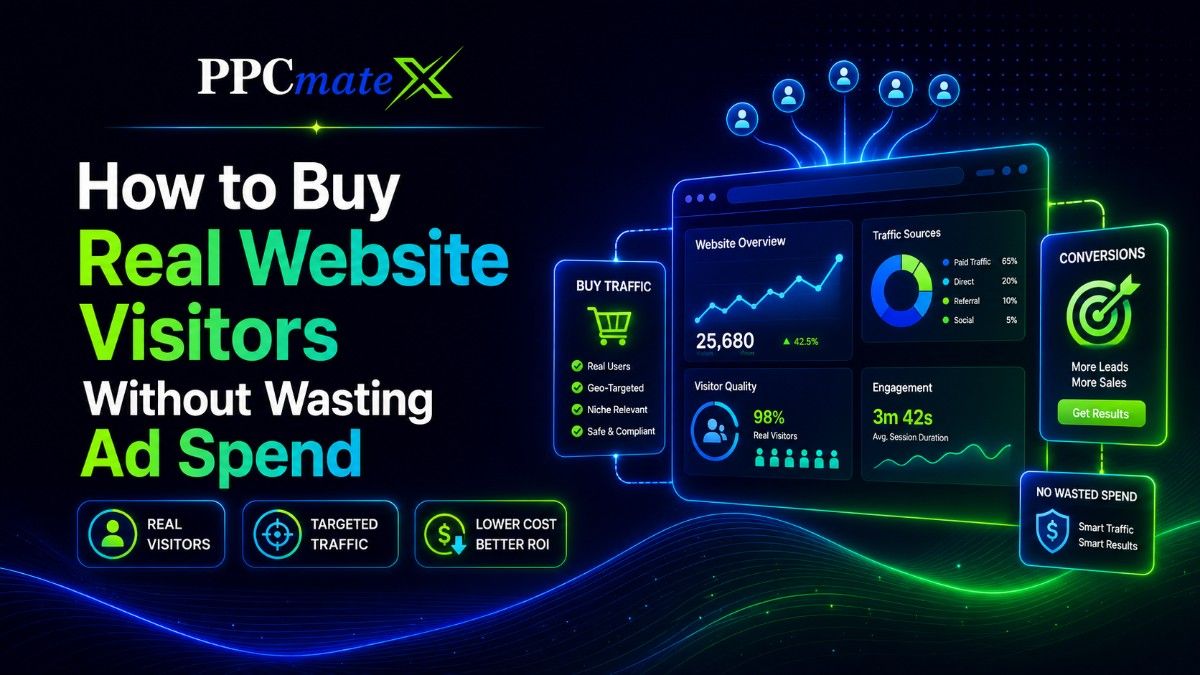
Buying real website visitors means paying to bring actual users to your site through controlled advertising campaigns. These visitors should come from real devices, real placements, and real traffic sources.
For advertisers, the goal is not just more sessions in analytics. The goal is to reach users who can click, read, sign up, buy, install, or take another useful action.
The safest way to buy real website visitors is through campaign-based traffic buying. You choose the ad format, audience, geo, budget, bid, landing page, and tracking setup. Then you measure results and improve the campaign with data.
Key Takeaways
Buying traffic works best when it is treated like performance advertising, not a shortcut.
Important points to remember:
- Real website visitors should come from real users, not bots or fake clicks.
- Paid visitors can come from display ads, push ads, native ads, video ads, pop-under ads, and programmatic traffic.
- Targeting helps match the traffic to your offer, audience, and budget.
- Tracking is needed to see which visitors create value.
- Optimization helps you pause weak sources and scale stronger ones.
What Does It Mean to Buy Real Website Visitors?
To buy real website visitors, you pay for users to reach your website through ads placed across websites, apps, or publisher networks. These users may click a banner, push notification, native ad, video placement, or pop-under page.
Real visitors should be human users with a genuine chance to engage. They should not be automated bots, fake sessions, forced visits, or low-quality clicks that only inflate analytics.
A good traffic campaign focuses on better visitor quality instead of only chasing high visit numbers. More traffic is useful only when it supports your campaign goal.
Where Do Paid Website Visitors Come From?
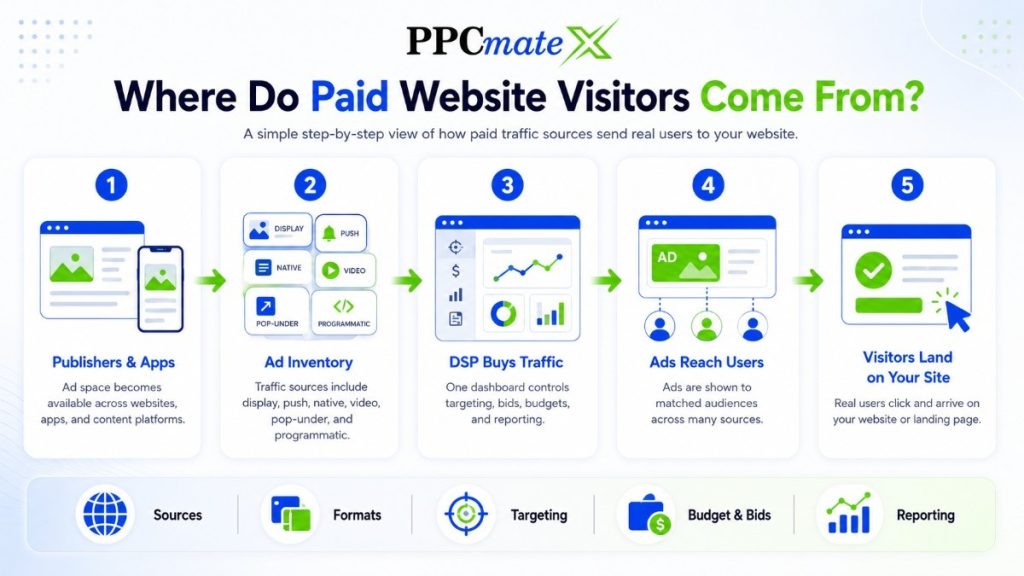
Paid website visitors usually come from advertising inventory. This inventory is available across publishers, apps, websites, content platforms, ad exchanges, and traffic networks.
A DSP can help advertisers buy traffic from many sources while controlling targeting, bids, budgets, and reporting from one dashboard. This makes DSP-based buying useful for teams that want more control than simple traffic packages.
Common paid traffic sources include:
| Traffic Source | How It Works | Best For |
| Display ads | Banner ads shown on websites or apps | Reach, retargeting, product offers |
| Push ads | Notification-style ads | Fast clicks, offers, app installs |
| Native ads | Content-style ad placements | Education, discovery, soft selling |
| Video ads | Short video placements | Awareness, demos, app previews |
| Pop-under ads | Landing page opens behind or near the browser session | High-volume testing |
| Programmatic ads | Automated buying across many sources | Scalable traffic campaigns |
How Paid Traffic Buying Works
Paid traffic buying starts with a campaign goal. The goal tells the platform what kind of traffic matters to your business.
For example, an affiliate may want signups. An e-commerce store may want purchases. A SaaS company may want trial users. A publisher may want engaged readers.
A typical campaign uses campaign buying rules such as:
- Goal: visits, leads, sales, installs, or retargeting
- Geo: country, region, or city
- Device: desktop, mobile, or tablet
- Format: display, push, native, video, or pop-under
- Bid: how much you are willing to pay
- Budget: daily or total campaign limit
- Tracking: pixel, postback, UTM, or analytics setup
These rules help the platform decide where your ads should appear and which users should see them.
Choose the Right Traffic Source
The best traffic source depends on your offer, funnel, and budget. Do not choose a source only because it is cheap.
Low-cost traffic can work when it is targeted, trackable, and optimized. Very cheap traffic with no source control can lead to fake clicks, high bounce rates, and poor conversion data.
Use this simple guide:
| Goal | Better Traffic Option | Why It Helps |
| Product sales | Display, native, retargeting | Lets users see the offer before clicking |
| Fast offer testing | Push or pop-under | Sends quick traffic to landing pages |
| App installs | Push, display, video | Works well for mobile users |
| Lead generation | Push, native, display | Matches short messages with forms |
| Brand awareness | Display or video | Builds wider visibility |
| Landing page testing | Pop-under or display | Helps collect fast behavior data |
If you need visual reach, banner ad traffic can help introduce the offer before asking users to act.
Use Targeting to Reach Better Visitors
Targeting is what separates useful traffic from random traffic. It helps your ads reach users who are more likely to care about your offer.
Start with simple targeting first. Too many filters can reduce volume before the campaign has enough data.
Common targeting options include:
- Country or region
- Device type
- Operating system
- Browser
- Language
- Connection type
- Website or app source
- Supply partner
- Time of day
- Retargeting audience
For direct-response campaigns, push traffic tests can work well when the offer is simple, urgent, and easy to understand.
Set Budget and Bids Carefully
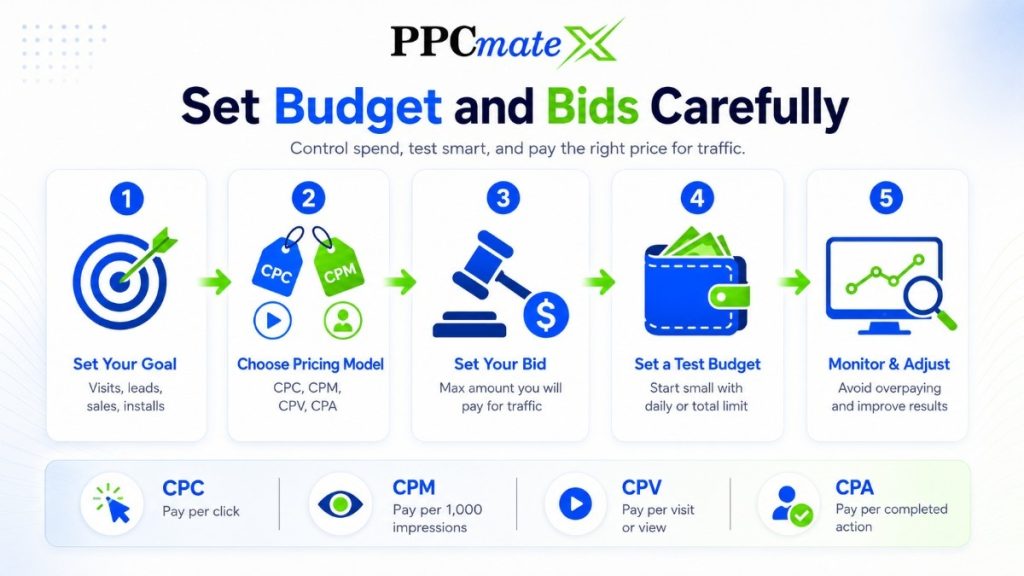
Budget controls how much you spend. Bids control how much you are willing to pay for traffic.
Many advertisers start with a small test budget. This protects spend while the campaign collects early data.
Common pricing models include:
| Pricing Model | What You Pay For | Best Use |
| CPC | Each click | Traffic and lead testing |
| CPM | 1,000 impressions | Reach and visibility |
| CPV | Each visit or view | Pop-under or visit-based campaigns |
| CPA | Completed action | Conversion-focused buying when available |
If you run display campaigns, a clear display bid plan helps you avoid overpaying for weak placements.
Add Tracking Before You Launch
Tracking shows what happens after a visitor lands on your site. Without tracking, you may know how many users clicked, but you will not know which traffic created value.
Set up tracking before the campaign starts. This makes the first test cleaner and easier to judge.
Track important actions such as:
- Landing page visits
- Button clicks
- Form submissions
- Account signups
- Purchases
- App installs
- Revenue
- Bounce rate
- Time on site
For performance campaigns, focus on traffic quality signals instead of clicks alone. A source with fewer clicks can still be better if it creates more leads or sales.
How to Avoid Fake or Low-Quality Traffic
Fake traffic can waste budget and damage campaign data. It can also make a poor campaign look active when real users are not engaging.
Look for warning signs early. A traffic source may be weak if it sends many visits but no useful actions.
Common red flags include:
- Very high clicks with no conversions
- Very short session time
- Sudden traffic spikes from unknown sources
- High bounce rate across every placement
- Strange device or browser patterns
- No source-level reporting
- No option to block weak placements
A better setup gives advertisers source controls, campaign limits, tracking options, and optimization tools. This helps you spend on traffic that can convert instead of traffic that only fills reports.
Launch a Small Test First
Start with one clear goal, one main landing page, and a small group of creatives. This keeps the test easy to read.
Do not test too many things at once. If you change the ad, audience, bid, and landing page at the same time, it becomes hard to know what caused the result.
A simple launch plan can include:
- One campaign goal
- One or two target geos
- One main device type
- Three to five creatives
- A daily budget limit
- Conversion tracking
- Source-level reporting
The first test should answer one question: which sources and users are worth more budget?
Optimize Based on Real Results
Optimization means improving the campaign after data comes in. It should be based on clicks, spend, conversions, CPA, ROAS, and source quality.
Start with the biggest waste areas first. If one source spends money but creates no results, pause it before making smaller changes.
Useful optimization actions include:
- Pause sources with poor results
- Increase bids on stronger sources
- Separate mobile and desktop traffic
- Test new headlines or images
- Improve landing page speed and message match
- Add weak sources to a blacklist
- Add strong sources to a whitelist
- Adjust bids by geo, device, or time
- Use frequency caps when available
A steady campaign improvement process helps advertisers scale traffic without guessing.
What to Measure After Buying Website Visitors
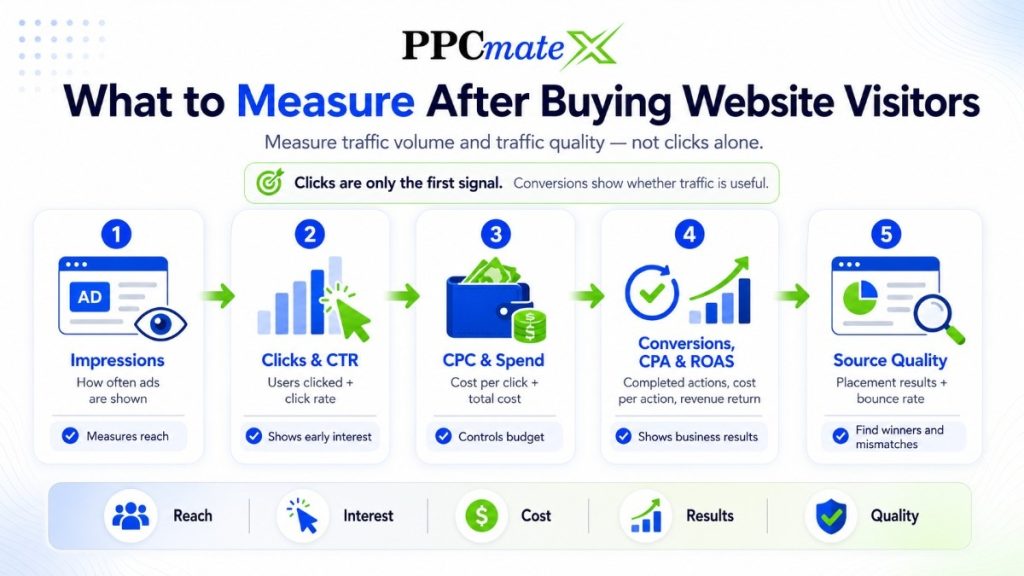
Clicks are only the first signal. Conversions show whether the traffic is useful.
Use campaign metrics to judge both traffic volume and traffic quality.
| Metric | What It Shows | Why It Matters |
| Impressions | How often ads were shown | Measures reach |
| Clicks | How many users clicked | Shows early interest |
| CTR | Click rate | Helps judge creative strength |
| CPC | Cost per click | Shows traffic cost |
| Spend | Total cost | Controls budget |
| Conversions | Completed actions | Shows business results |
| CPA | Cost per action | Shows profit potential |
| ROAS | Revenue from ad spend | Useful for sales campaigns |
| Source performance | Results by placement | Finds winners and losers |
| Bounce rate | Fast exits | Shows landing page or traffic mismatch |
The best traffic source is not always the cheapest one. It is the one that brings visitors who match your goal at a cost you can control.
How PPCmate Helps Advertisers Buy Real Website Visitors
PPCmate helps advertisers buy targeted website traffic through a self-serve programmatic platform. Advertisers can launch campaigns, choose ad formats, set targeting, control bids, manage budgets, and review performance from one place.
PPCmate supports traffic buying across formats such as display ads, push notifications, native ads, video ads, and pop-under ads. This gives media buyers, affiliates, e-commerce teams, and agencies more ways to test traffic and compare results.
Advertisers can use PPCmate to:
- Buy targeted website traffic
- Choose geos, devices, OS, and sources
- Control daily budgets and bids
- Test creatives and landing pages
- Track campaign performance
- Pause weak placements
- Scale stronger sources
- Compare multiple ad formats
For advertisers focused on traffic that converts, the main advantage is control. You can start small, measure results, and scale based on real campaign data.
Ready to Buy Real Website Visitors With More Control?
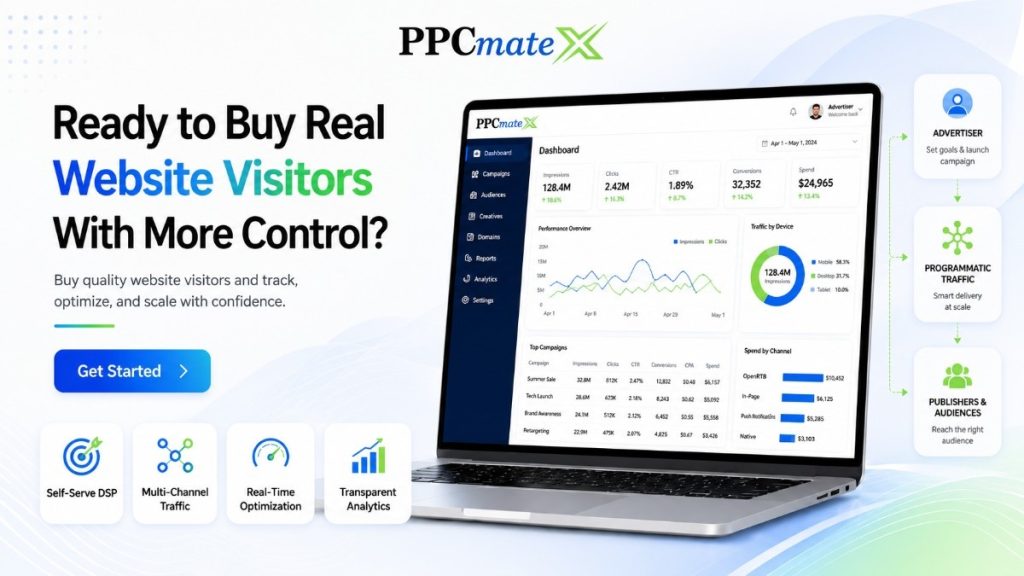
PPCmate gives advertisers a flexible platform for buying real, targeted website traffic through programmatic ads, display ads, push notifications, and other high-performing ad formats.
Whether you want to drive more visitors to a landing page, promote an offer, or scale a performance campaign, PPCmate helps you launch, track, and optimize traffic campaigns from one place.
FAQs
1. Can you buy real website visitors?
Yes. You can buy real website visitors through paid advertising campaigns. The key is to use a platform that offers targeting, tracking, source controls, and optimization instead of random traffic delivery.
2. Is buying website traffic safe?
Buying website traffic can be safe when the traffic comes from real ad placements and is tracked properly. Avoid providers that promise huge traffic volumes with no targeting, no source visibility, or no quality controls.
3. What is the best way to buy website traffic?
The best way is to start with a clear campaign goal, choose a relevant ad format, set targeting, add tracking, launch a small test, and optimize based on conversions.
4. How do I know if website visitors are real?
Check analytics, source reports, session behavior, conversions, device data, and bounce rate. Real traffic should show natural patterns and at least some useful engagement when the targeting and offer match.
5. What is the difference between cheap traffic and quality traffic?
Cheap traffic focuses on low cost. Quality traffic focuses on users who can engage or convert. A low CPC is not useful if the traffic does not create leads, sales, signups, or other campaign goals.
6. Which ad formats are best for buying website visitors?
Display ads work well for reach and retargeting. Push ads work well for direct response. Native ads work well when the offer needs more context. Pop-under ads can help with high-volume landing page tests.
7. Should I track clicks or conversions?
Track both, but judge performance by conversions. Clicks show interest, while conversions show whether the traffic creates value.
8. Does PPCmate help advertisers buy real website visitors?
Yes. PPCmate helps advertisers buy targeted website traffic through campaign-based media buying, multiple ad formats, targeting controls, budget settings, reporting, and optimization tools.