What Is Ad Fraud (IVT) in Programmatic Advertising? How to Detect and Prevent It
Every programmatic advertiser eventually runs into the same question: is this traffic actually real? Invalid traffic, or IVT, covers everything from harmless crawler bots to deliberate click fraud, and it quietly eats campaign budget when left unchecked. Knowing what counts as IVT and how detection actually works helps advertisers protect spend without becoming paranoid about every unusual data point.
This guide breaks down what ad fraud means in practice, the main categories of invalid traffic, how detection systems actually catch it, and the mistakes that let bad traffic slip through.
What Ad Fraud (IVT) Actually Means
Invalid traffic is any impression, click, or engagement that doesn’t come from a genuine, intended user interaction. That covers a wide range – from a search engine crawler indexing a page to a deliberately operated bot farm generating fake clicks. Not all IVT is malicious, but all of it distorts the data advertisers use to make decisions.
This is why fake engagement distorts campaign performance in the same way IVT does – both create a false signal that something is working when it isn’t.
General vs Sophisticated Invalid Traffic
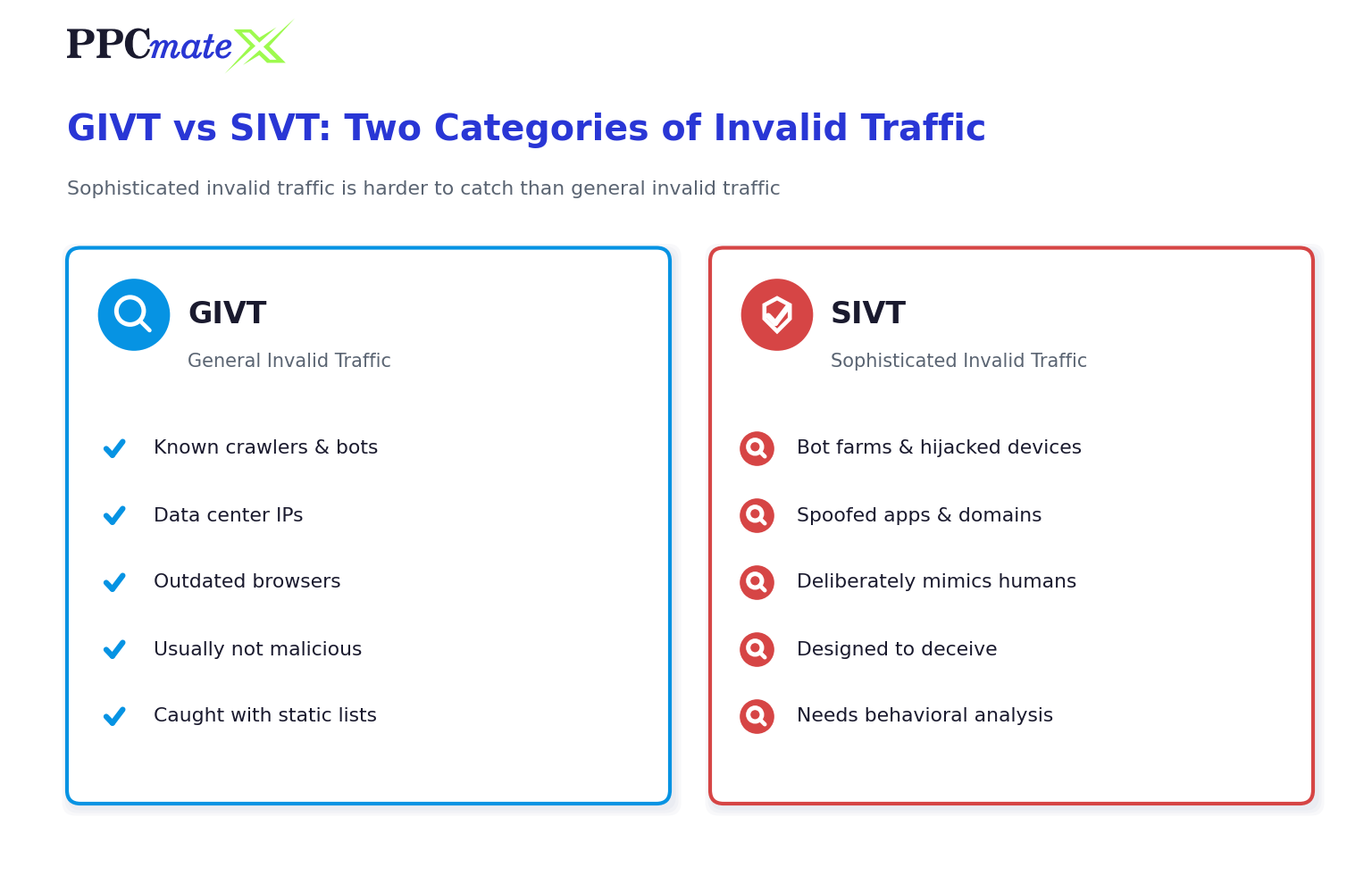
| Focus Area | GIVT (General) | SIVT (Sophisticated) |
| Source | Known crawlers, data center IPs, outdated browsers | Bot farms, hijacked devices, spoofed apps |
| Intent | Usually not malicious | Deliberately designed to mimic real users |
| Detection method | Static lists, known signatures | Behavioral analysis, pattern modeling |
| Difficulty to catch | Low | High |
Most verification tools catch GIVT easily. SIVT is the harder category, and it’s why fraud prevention needs more than a simple blocklist.
Common Types of Invalid Traffic
- Bot traffic – automated scripts generating impressions or clicks with no human behind them
- Click farms – low-cost human labor clicking ads repeatedly, often mixed with automation
- Domain spoofing – low-quality inventory disguised as a premium publisher’s domain
- Ad stacking – multiple ads layered in the same slot so only the top one is visible, but all are billed
- SDK spoofing – fake app install or in-app event signals sent without a real app session
How Ad Fraud Detection Actually Works
- Traffic pattern analysis
Detection systems compare click and impression timing, frequency, and session behavior against known human patterns. - Device and IP reputation checks
Sources tied to data centers, known bot networks, or repeated abuse get flagged automatically. - Behavioral signals
Mouse movement, scroll depth, and time-on-page help separate real sessions from scripted ones. - Post-bid verification
Third-party verification tags measure viewability and validity after the impression has already served. - Source-level exclusion
Confirmed fraudulent sources get blocked or blacklisted from future delivery.
Where This Overlaps With Real-Time Bidding
Fraud filtering increasingly happens inside the same auction covered in real-time bidding – a platform built for DSP media buying can reject a suspicious impression before a bid is ever placed, not just after the fact.
Common Mistakes Advertisers Make With Fraud Prevention
- Judging traffic quality only by total click or impression volume
- Relying on a single blocklist instead of layered, ongoing verification
- Ignoring source-level performance data that would reveal a bad supplier
- Treating every anomaly as fraud instead of checking for legitimate explanations first
- Not re-checking sources periodically, since fraud patterns evolve over time
Ready to Buy Traffic You Can Actually Verify?
PPCmate gives advertisers source-level reporting and targeting controls built to catch low-quality traffic early, so budget goes toward verified, high-quality traffic instead of impressions that never had a real user behind them.
FAQs
What does IVT stand for in advertising?
IVT stands for invalid traffic – any impression, click, or engagement that doesn’t come from a genuine, intended user interaction.
What is the difference between GIVT and SIVT?
GIVT (General Invalid Traffic) comes from known, usually non-malicious sources like crawlers or outdated browsers and is easy to detect with static lists. SIVT (Sophisticated Invalid Traffic) is deliberately designed to mimic real users and requires behavioral analysis to catch.
Is all bot traffic considered fraud?
No. Some bot traffic, like search engine crawlers, is a normal and expected part of how the internet works. Fraud specifically refers to invalid traffic designed to deceive advertisers or generate false billable events.
How can advertisers detect ad fraud?
Detection combines traffic pattern analysis, device and IP reputation checks, behavioral signals like scroll depth and time-on-page, and post-bid verification from third-party tools.
What is ad stacking?
Ad stacking is when multiple ads are layered on top of each other in the same slot so only the top ad is visible to the user, but the advertiser underneath is still billed for an impression no one actually saw.
Can fraud filtering happen before a bid is placed?
Yes. Modern DSPs can apply fraud and quality filters during the real-time bidding auction itself, rejecting suspicious impressions before a bid is ever submitted rather than only flagging them afterward.
Why shouldn’t advertisers judge traffic quality by volume alone?
High volume can mask low-quality or fraudulent sources. A smaller volume of verified, engaged traffic typically produces better campaign outcomes than a large volume with no quality checks behind it.