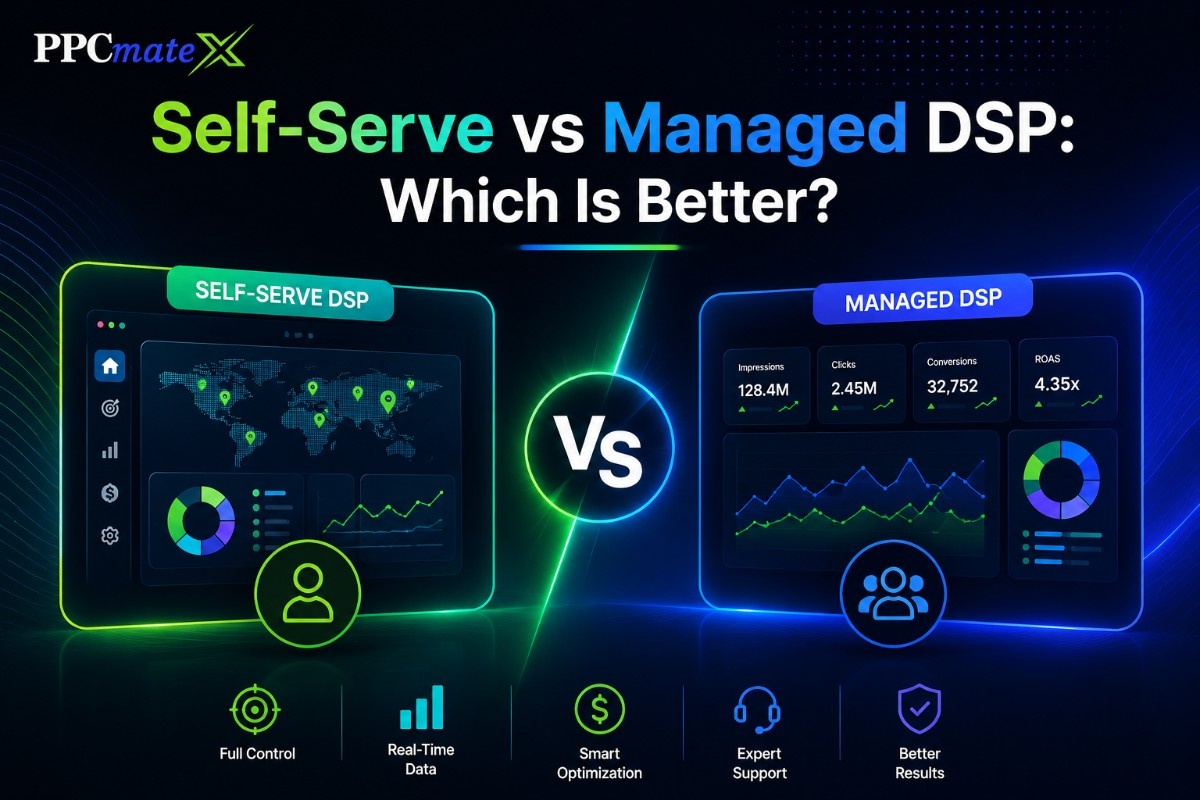
Choosing between a self-serve vs managed DSP is an important decision for advertisers who want to buy programmatic traffic with the right balance of control, support, and performance.
A self-serve DSP gives you direct control over targeting, bids, budgets, creatives, and reporting. You manage the campaign yourself and make optimization decisions based on your data.
A managed DSP gives you expert support from a platform team or account manager who helps set up, monitor, and optimize your campaigns.
For advertisers, affiliates, agencies, e-commerce teams, and media buyers, the better choice is not always about which model is more powerful. It is about which DSP model fits your team, budget, goals, and level of experience.
Key Takeaways
- Self-serve DSPs are better for advertisers who want more control and have campaign management skills.
- Managed DSPs are better for teams that need expert help, faster setup, or less daily work.
- Hybrid support can work well when advertisers want control with guidance.
- The best choice depends on budget, experience, traffic quality, tracking, and campaign goals.
- Strong results still depend on clean data, clear KPIs, and regular optimization.
What Is a Self-Serve DSP?
A self-serve DSP is a demand-side platform that advertisers use directly.
You log in to the platform and manage the campaign yourself. This includes audience targeting, bids, budgets, creatives, frequency caps, placements, and reports.
A self-serve model works best when your team understands the DSP buying workflow and can make data-based decisions.
What Advertisers Control
With a self-serve DSP, you usually control:
- Campaign setup
- Geo, device, OS, and browser targeting
- Bids and pricing models
- Daily and total budgets
- Creative testing
- Source blocking
- Whitelists and blacklists
- Tracking and reporting
- Optimization changes
The main benefit is control. The main challenge is time.
What Is a Managed DSP?
A managed DSP is a service model where specialists help manage your campaign.
You still set the goal, budget, offer, and target audience. The managed team helps with setup, targeting, bidding, optimization, and reporting.
This can be useful when you want to run campaigns but do not have enough time or programmatic experience.
A managed model is often helpful when campaigns need active campaign optimization flow across traffic sources, creatives, and bidding.
Self-Serve vs Managed DSP: Quick Comparison

| Area | Self-Serve DSP | Managed DSP |
| Control | High | Medium |
| Setup speed | Depends on your skill | Faster with expert support |
| Time needed | Higher | Lower |
| Expertise needed | More in-house skill | Less in-house skill |
| Cost structure | Usually lower management cost | May include service fees |
| Transparency | Direct dashboard access | Depends on reporting access |
| Optimization | Done by your team | Done with expert help |
| Best for | Skilled buyers and agencies | Newer teams or busy advertisers |
When Self-Serve DSP Is Better
Self-serve DSP is better when you want hands-on control and your team can manage campaigns often.
It fits advertisers who want to test, learn, and optimize directly.
Choose Self-Serve If You Have:
- A media buyer or performance marketer
- Clear CPA, ROAS, or conversion goals
- Time to check reports often
- Strong tracking setup
- Creative testing ability
- Experience with bids and budgets
- A need for direct control
Self-serve also works well for agencies and affiliates that need fast changes. If a source performs poorly, you can reduce bids or block it without waiting for another team.
For campaigns using auction-based buying, direct control over the RTB buying process can help you react faster to performance changes.
When Managed DSP Is Better
Managed DSP is better when you want expert support or do not have enough time to manage campaigns daily.
It can help newer advertisers avoid basic setup mistakes.
Choose Managed If You Need:
- Help with campaign setup
- Guidance on targeting
- Support with bid changes
- Help reading performance data
- Less daily campaign work
- Faster launch support
- Expert traffic quality review
Managed service can also help when the campaign has a larger budget or more complex goals.
For example, an e-commerce brand may want to test display, native, push, and video ads but may not have a full media buying team.
Is Hybrid DSP Support a Better Option?
A hybrid model gives advertisers both control and support.
You may manage daily changes yourself while getting help with onboarding, strategy, or optimization reviews.
Hybrid support is useful when you want to learn the platform but still need expert guidance.
Hybrid Works Well When:
- You are new to programmatic buying
- You want to keep dashboard access
- You need help during launch
- You want support before scaling
- Your team can optimize but needs review
Hybrid support can be a strong middle ground for growing teams.
Cost and Control Comparison
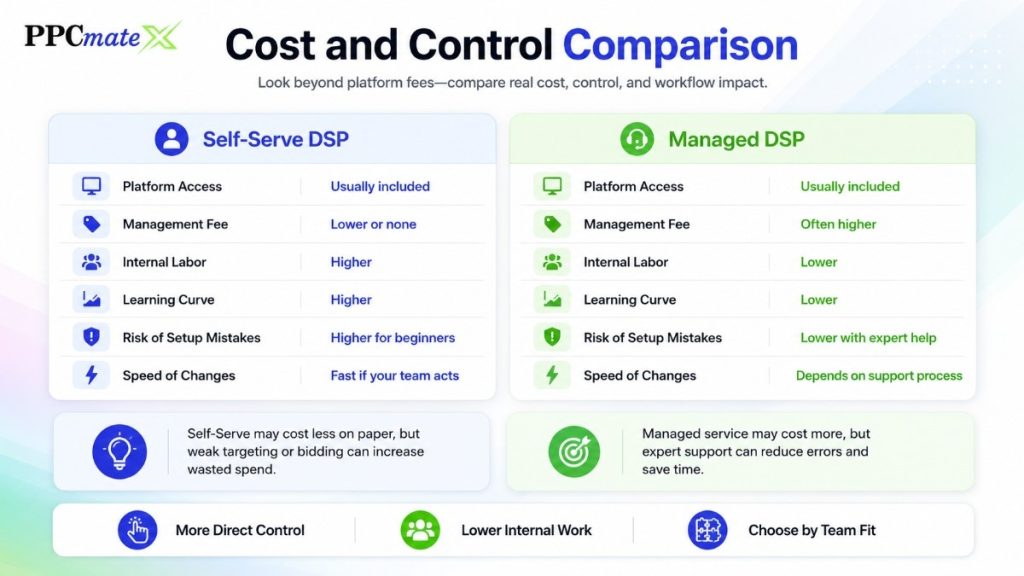
Cost is not only about platform fees.
You also need to count time, labor, errors, and wasted spend.
| Cost Factor | Self-Serve DSP | Managed DSP |
| Platform access | Usually included | Usually included |
| Management fee | Lower or none | Often higher |
| Internal labor | Higher | Lower |
| Learning curve | Higher | Lower |
| Risk of setup mistakes | Higher for beginners | Lower with expert help |
| Speed of changes | Fast if your team acts | Depends on support process |
Self-serve may cost less on paper. But if your team makes weak targeting or bidding decisions, wasted spend can rise.
Managed service may cost more, but expert support can reduce errors and save time.
Metrics to Track Before Choosing
Do not choose a DSP model only by price.
Choose based on performance control and your ability to act on data.
Track these metrics:
- CPA
- ROAS
- Conversion rate
- CTR
- CPC
- CPM
- Win rate
- Spend by source
- Source-level conversions
- Creative performance
- Budget pacing
If your team can review these metrics and make changes, self-serve may be a good fit.
If these reports feel hard to manage, a managed or hybrid model may be safer.
Traffic Quality Matters in Both Models
Self-serve and managed DSPs both need traffic quality control.
Good traffic quality means your ads reach real users who match your offer. Poor traffic can waste budget even if clicks look cheap.
Review:
- Sources
- Sites or apps
- Device types
- GEOs
- Suspicious clicks
- Bounce rate
- Lead quality
- Conversion rate
- ROAS
For mobile campaigns, signals like OS, device, app environment, and connection type can affect results. A strong mobile buying strategy helps advertisers compare traffic quality with more context.
Which DSP Model Fits Your Business?
Self-Serve Is Best For:
- Affiliates testing offers often
- Agencies with media buying teams
- E-commerce teams with tracking data
- Advertisers who want direct control
- Teams that can optimize campaigns daily
- Buyers who need flexible testing
Managed Is Best For:
- New programmatic advertisers
- Small teams with limited time
- Brands with larger budgets
- Teams that need expert setup
- Advertisers who want less daily work
- Campaigns with complex goals
Hybrid Is Best For:
- Growing advertisers
- Teams learning programmatic buying
- Campaigns moving from test to scale
- Brands that want control plus support
Common Mistakes to Avoid
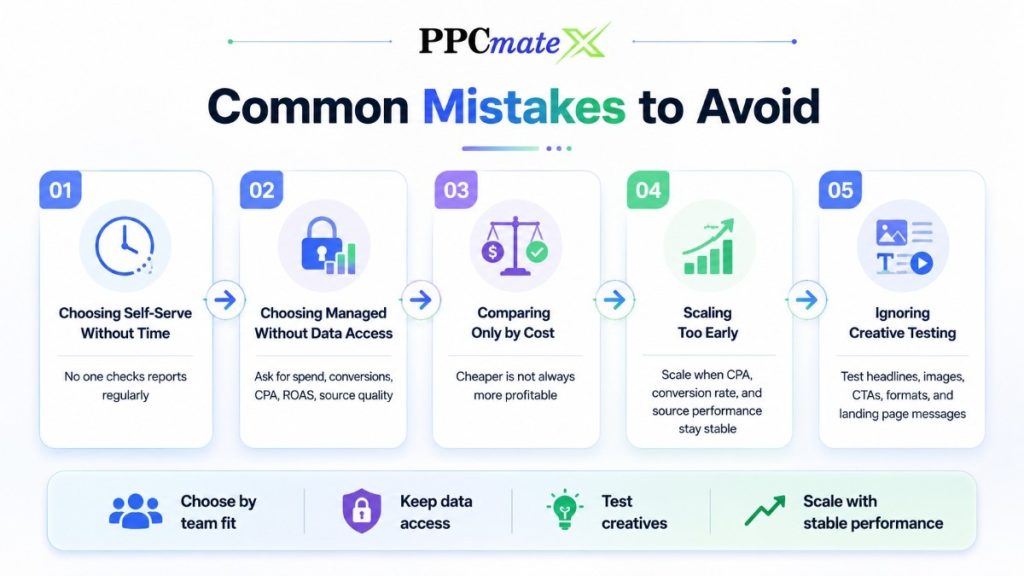
Choosing Self-Serve Without Time
Self-serve needs regular attention. If no one checks reports, poor sources can spend too much.
Choosing Managed Without Data Access
Managed support is helpful, but you should still understand performance. Ask for clear reports on spend, conversions, CPA, ROAS, and source quality.
Comparing Only by Cost
A cheaper model is not always better. The real goal is profitable traffic.
Scaling Too Early
Do not increase budget only because clicks are coming in. Scale when CPA, conversion rate, and source performance stay stable.
Ignoring Creative Testing
Good targeting cannot fix weak ads. Test headlines, images, CTAs, formats, and landing page messages.
For example, advertisers testing push traffic formats should watch both CTR and conversion quality before scaling.
Final Verdict: Which Is Better?
Self-serve DSP is better if you want control, transparency, and direct optimization.
Managed DSP is better if you want expert help, faster setup, and less daily campaign work.
Hybrid support is often best for advertisers who want to stay involved but still need guidance.
The right choice depends on one question:
Can your team manage campaign data, bids, budgets, creatives, and traffic quality on a regular basis?
If yes, self-serve may be the better fit.
If no, managed or hybrid support may protect your budget and help you launch with more confidence.
Ready to Launch Programmatic Ads With More Control?
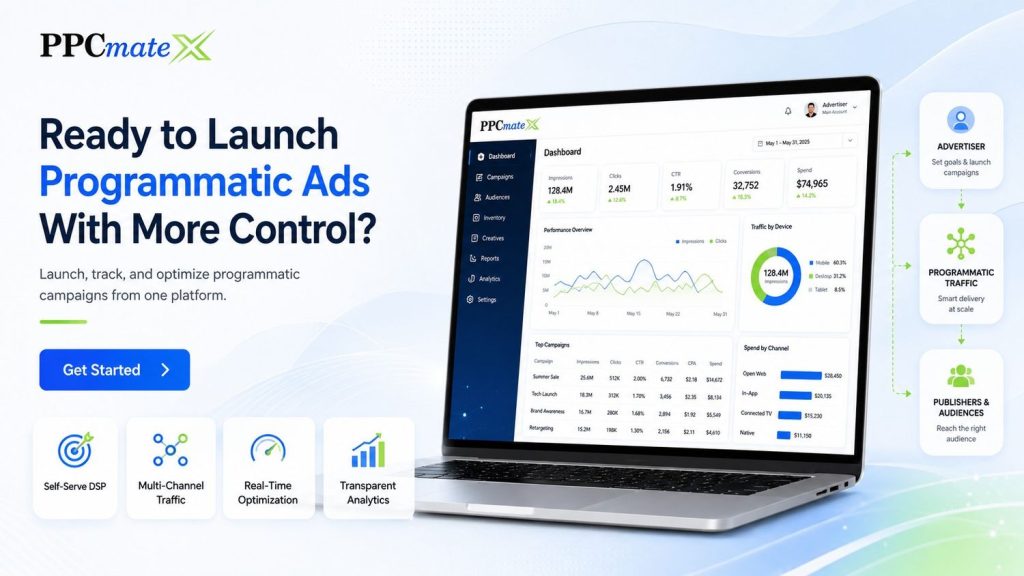
PPCmate gives advertisers a flexible DSP for buying targeted traffic across multiple channels, formats, and pricing models. Whether you want hands-on self-serve control or managed campaign support, PPCmate helps you launch, track, and optimize programmatic campaigns from one platform.
FAQs
Is a self-serve DSP cheaper than a managed DSP?
Self-serve can have lower management costs, but it needs more internal time. If your team lacks experience, wasted spend can make it more expensive.
Is managed DSP better for beginners?
Yes, managed DSP support is often better for beginners because experts can help with setup, targeting, bidding, and optimization.
Can agencies use self-serve DSPs?
Yes. Agencies often use self-serve DSPs because they need direct control over campaigns, budgets, sources, and reports.
Can advertisers switch from managed to self-serve later?
Yes. Many advertisers start with managed support, learn the platform, and then move into self-serve once they have enough confidence and data.
What is the best DSP model for performance campaigns?
The best model is the one that helps you control CPA, ROAS, conversion rate, and traffic quality. For skilled teams, that may be self-serve. For newer teams, managed or hybrid support may work better.