Programmatic advertising has two sides: buyers and sellers.
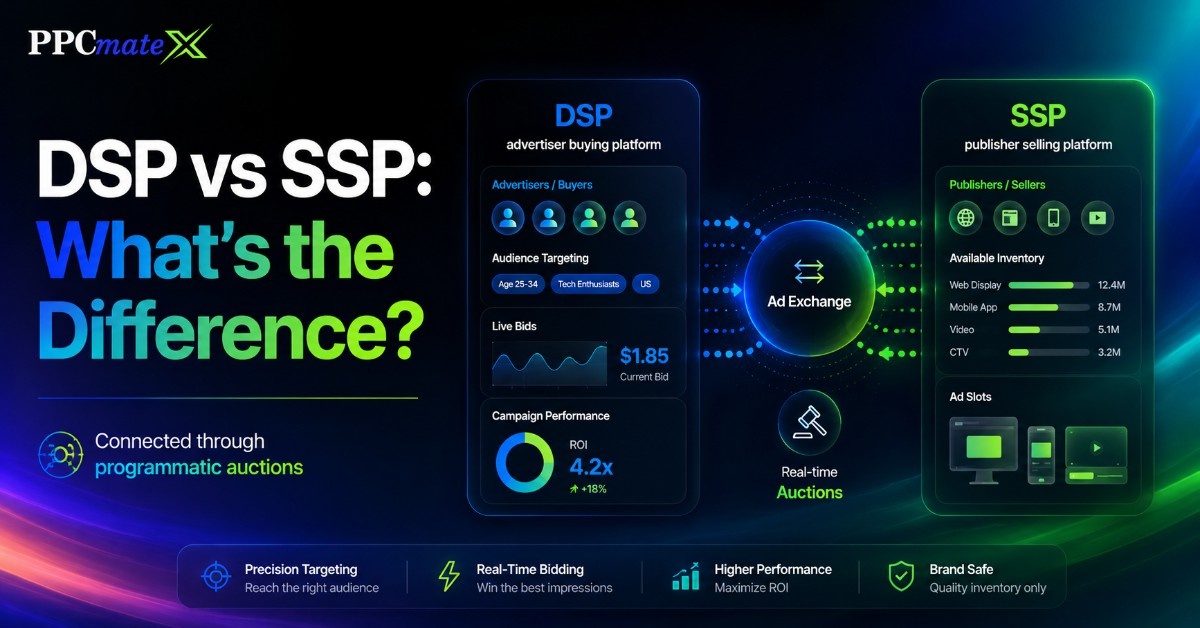
A DSP, or demand-side platform, helps advertisers buy digital ad inventory. An SSP, or supply-side platform, helps publishers sell that inventory.
The easiest way to understand the difference is this:
- DSP = advertiser tool
- SSP = publisher tool
- Ad exchange = auction marketplace between them
Advertisers use DSPs to reach the right users at the right price. Publishers use SSPs to sell ad space for the best possible revenue.
Key Takeaways
- A DSP helps advertisers buy ad impressions across websites, apps, and traffic sources.
- An SSP helps publishers sell ad impressions to multiple buyers.
- DSPs focus on targeting, bidding, budgets, and campaign results.
- SSPs focus on fill rate, price floors, yield, and publisher revenue.
- Both platforms work together through real-time bidding and ad exchanges.
What Is a DSP?
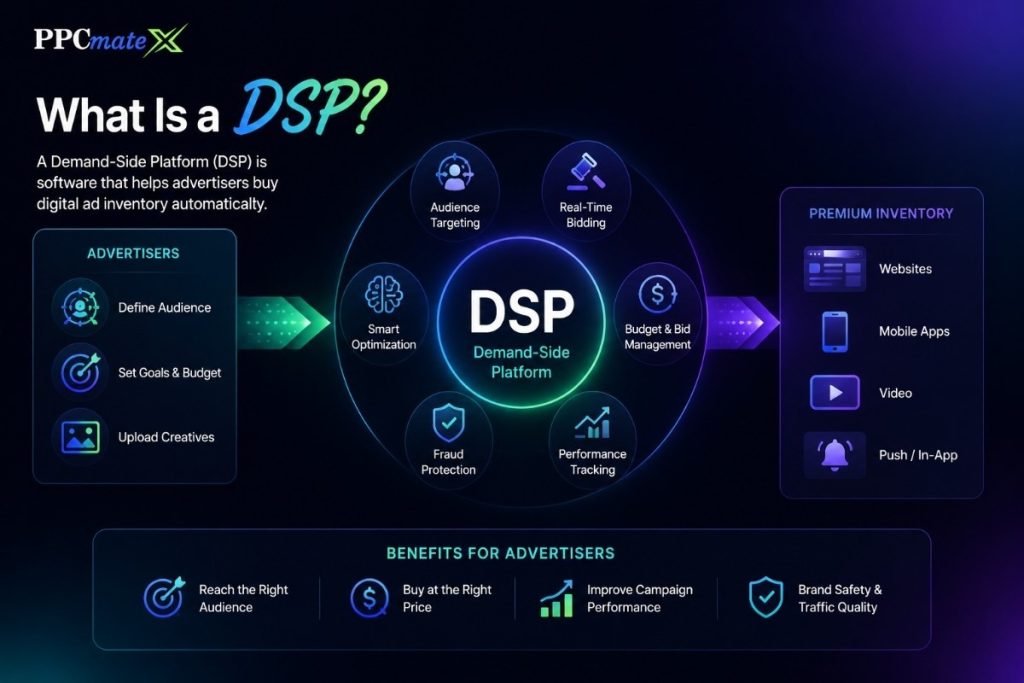
A demand-side platform is software advertisers use to buy digital ad inventory automatically.
Instead of contacting publishers one by one, advertisers can use one DSP to manage campaigns across many sources. This makes programmatic display buying faster and easier to control.
A DSP helps advertisers manage:
- Campaign setup
- Audience targeting
- Bids and budgets
- Creative testing
- Tracking and reporting
- Traffic source optimization
- Fraud and quality controls
For advertisers, the goal is simple: buy impressions that can help drive clicks, leads, installs, sales, or other campaign actions.
What Is an SSP?
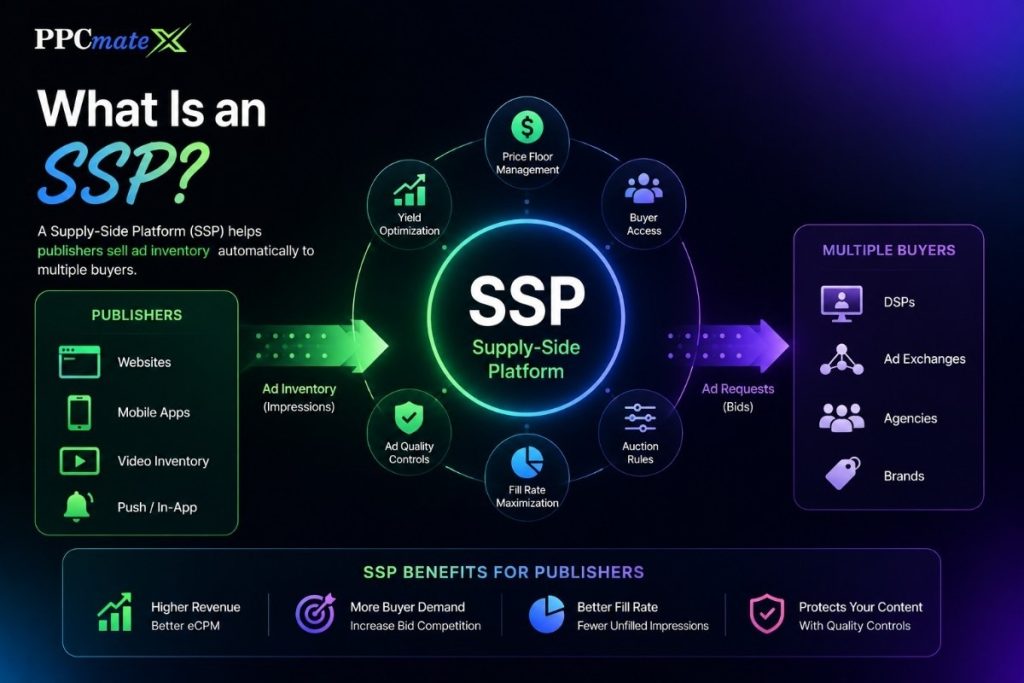
A supply-side platform is software publishers use to sell their ad inventory automatically.
Publishers may include website owners, app developers, media companies, and content platforms. Their inventory can include banners, native placements, video slots, push traffic, or in-app ad space.
An SSP helps publishers manage:
- Available ad placements
- Price floors
- Buyer access
- Auction rules
- Fill rate
- Revenue optimization
- Ad quality controls
The SSP’s goal is to help publishers sell inventory at the best possible price while protecting their site, app, and user experience.
DSP vs SSP: Main Difference
| Area | DSP | SSP |
| Main user | Advertisers, agencies, affiliates, brands | Publishers, app owners, media owners |
| Main goal | Buy valuable impressions efficiently | Sell inventory for maximum revenue |
| Market side | Demand side | Supply side |
| Main focus | Targeting, bidding, budget control, conversions | Yield, fill rate, price floors, ad quality |
| Key metrics | CPA, ROAS, CTR, CPC, CPM, conversions | eCPM, fill rate, yield, revenue, bid density |
| Control type | Which users, sources, and placements to buy | Which buyers, ads, and bids to accept |
| Best for | Campaign performance | Inventory monetization |
A DSP and SSP are not competitors. They serve opposite sides of the same transaction.
How DSPs and SSPs Work Together
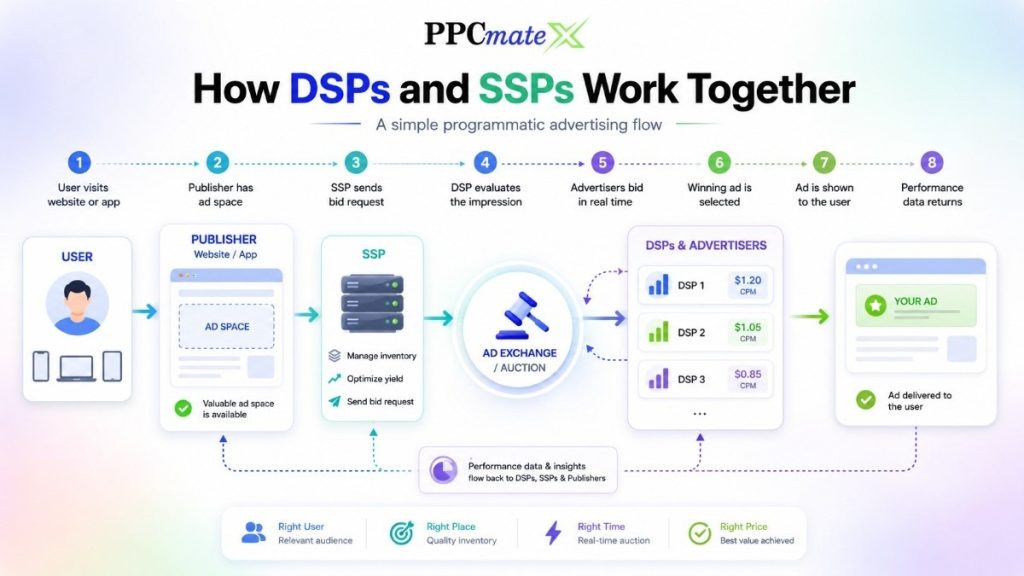
DSPs and SSPs usually meet through an ad exchange or direct programmatic connection.
Here is the simple flow:
- A user opens a website or app.
- The publisher has an ad placement available.
- The SSP sends a bid request.
- The DSP checks if the impression matches the advertiser’s campaign.
- The DSP places a bid if the impression has value.
- The SSP or exchange selects the winning bid.
- The winning ad is shown to the user.
- Both sides collect performance data.
This process is called real-time bidding. A strong RTB buying flow lets advertisers compete for impressions without manual deals for every placement.
DSP vs SSP vs Ad Exchange
An ad exchange is the marketplace where DSPs and SSPs connect.
- DSP: Helps advertisers buy.
- SSP: Helps publishers sell.
- Ad exchange: Runs the auction between both sides.
Think of it like a marketplace. The advertiser brings demand through a DSP. The publisher brings supply through an SSP. The exchange handles the auction.
Why Advertisers Should Care About SSPs
Even though advertisers use DSPs, SSPs still affect campaign quality.
An SSP can influence:
- Which publishers are available
- How much inventory costs
- Which supply paths are used
- How transparent the bid request is
- Whether traffic quality is strong or weak
This matters because two DSPs may access the same publisher through different supply paths. One path may be direct and clean. Another may include more intermediaries, higher fees, or weaker transparency.
For advertisers running AI-driven buying, clean supply data helps bidding tools make better decisions.
Important DSP Features for Advertisers
A good DSP should help advertisers control spend and improve results.
Look for features such as:
- Geo, device, OS, language, and source targeting
- Budget and bid controls
- CPM, CPC, or conversion-focused buying options
- Creative and landing page testing
- Source-level reporting
- Fraud protection
- Blacklists and whitelists
- Real-time optimization
For mobile campaigns, strong mobile traffic basics are especially important because device, OS, carrier, app, and geo can all affect results.
Important SSP Features Publishers Use
SSPs are built for monetization, not campaign buying.
Common SSP features include:
- Price floor management
- Header bidding support
- Private marketplace deals
- Buyer filtering
- Ad quality controls
- Yield optimization
- Revenue reporting
- Fill rate tracking
These tools help publishers decide which buyers can access their inventory and what minimum price they should accept.
What Is Supply Path Optimization?
Supply path optimization, or SPO, is how advertisers choose better routes to inventory.
In programmatic advertising, the same impression can sometimes be available through more than one SSP or reseller. SPO helps buyers reduce waste by choosing paths that are more direct, transparent, and cost-effective.
Advertisers should care about SPO because it can help:
- Reduce unnecessary fees
- Improve traffic transparency
- Avoid duplicate auctions
- Improve bid efficiency
- Protect campaign quality
SPO is one reason advertisers should not look only at low CPMs. A cheaper path is not always a better path if traffic quality is weak.
Transparency Terms Advertisers Should Know
Programmatic supply chains can be complex. These terms help advertisers check inventory quality:
- ads.txt: Shows which companies are authorized to sell a publisher’s web inventory.
- app-ads.txt: Similar to ads.txt, but for mobile app inventory.
- sellers.json: Helps buyers identify sellers and intermediaries.
- SupplyChain object: Shows the chain of parties involved in a bid request.
- Price floor: The minimum bid a publisher will accept.
- Bid request: The signal sent from the sell side when an impression becomes available.
These details help advertisers avoid low-quality or unclear supply paths.
Which One Do Advertisers Need?
Advertisers usually need a DSP, not an SSP.
Use a DSP if you want to:
- Buy traffic
- Launch campaigns
- Target users
- Set bids and budgets
- Test creatives
- Track conversions
- Optimize toward CPA or ROAS
You would use an SSP only if you own traffic and want to sell ad inventory.
For most advertisers, agencies, affiliates, and e-commerce teams, the DSP is the platform that matters most day to day.
Common Use Cases
Advertisers use DSPs for:
- E-commerce campaigns
- Affiliate offers
- App install campaigns
- Retargeting
- Lead generation
- Display campaigns
- Native campaigns
- Video campaigns
- Push and pop-under traffic testing
Different formats work for different goals. For example, native ad placements can help with educational offers, while push traffic campaigns can support fast direct-response testing.
Ready to Launch Programmatic Ads With More Control?
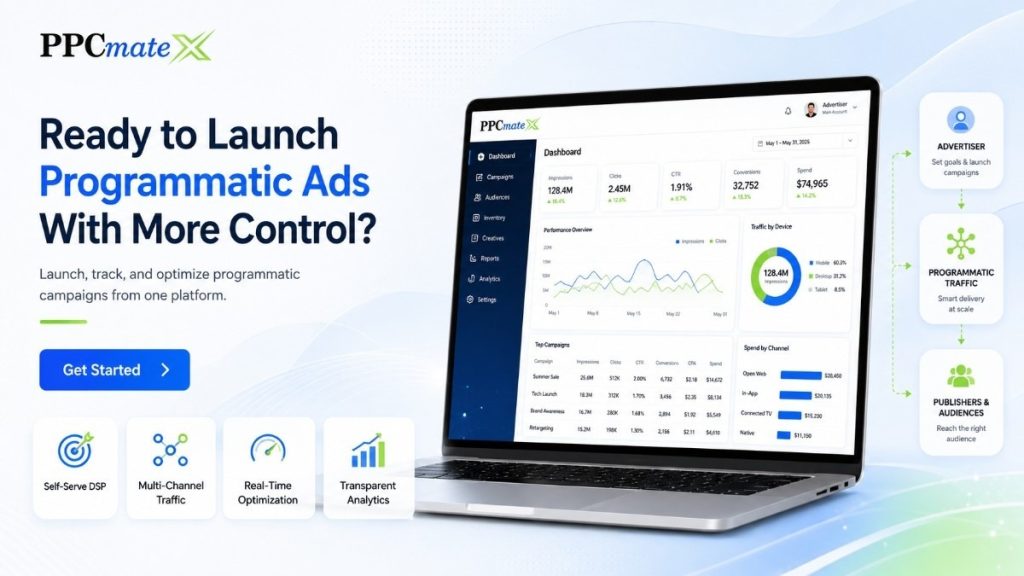
PPCmate gives advertisers a flexible DSP for buying targeted traffic across multiple channels, formats, and pricing models. Whether you want hands-on self-serve control or managed campaign support, PPCmate helps you launch, track, and optimize programmatic campaigns from one platform.
FAQs
Is a DSP the same as an SSP?
No. A DSP is used by advertisers to buy inventory. An SSP is used by publishers to sell inventory.
Do DSPs and SSPs work without ad exchanges?
Sometimes. Some platforms use direct integrations, private marketplaces, or direct supply paths. But many programmatic auctions still involve exchanges or exchange-like connections.
Is RTB part of DSP or SSP?
RTB involves both. The SSP sends the bid request, and the DSP decides whether to bid.
Why do publishers use SSPs?
Publishers use SSPs to sell inventory, manage price floors, connect with buyers, and improve revenue.
Why do advertisers use DSPs?
Advertisers use DSPs to buy traffic, control targeting, manage bids, track results, and improve campaign performance.