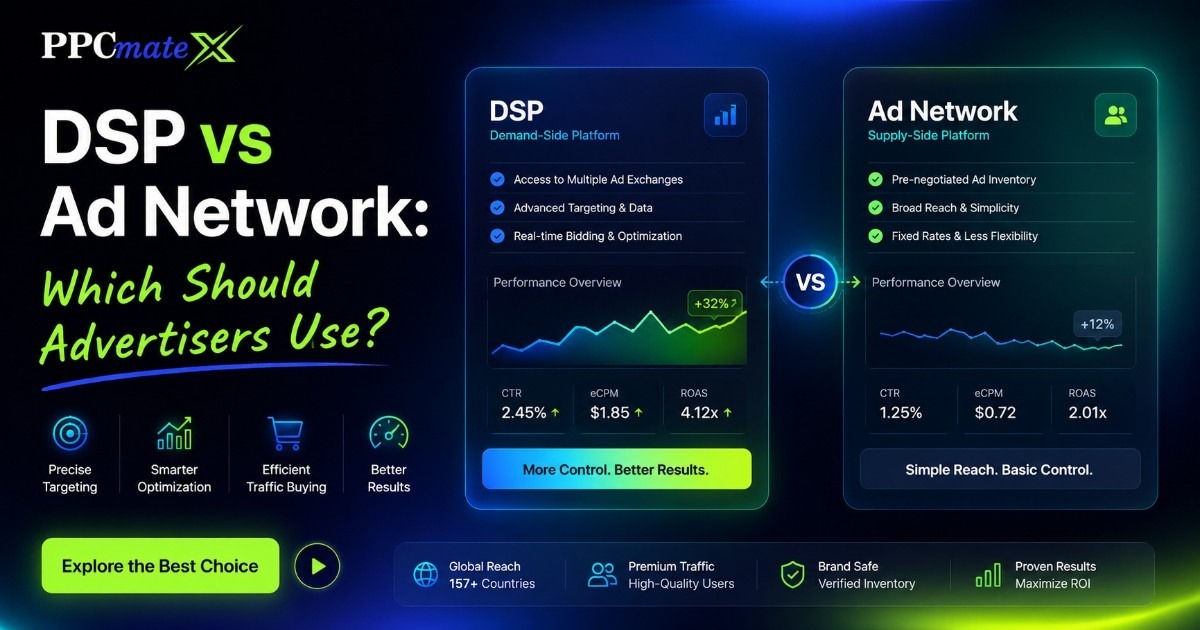
Advertisers often compare DSPs and ad networks because both help buy digital ad traffic, but they give very different levels of control. An ad network usually packages inventory from multiple publishers and sells it in a simpler way. A DSP gives advertisers a more direct way to buy programmatic traffic across sources, formats, and supply partners.
The main difference is how much control the advertiser has. With a DSP, media buyers can manage targeting, bids, budgets, frequency, creatives, sources, and optimization from one platform. With an ad network, setup may be easier, but source visibility, bidding control, and campaign data can be more limited.
For advertisers, agencies, affiliates, and e-commerce teams, the right choice depends on the campaign goal. If you want quick reach with less setup, an ad network can work. If you need better targeting, clearer reporting, traffic-quality control, and performance-focused scaling, a DSP is usually the stronger option.
Key Takeaways
- A DSP is better for advertisers who want source-level control, real-time optimization, and scalable testing.
- An ad network is better for simple buying, fast setup, or managed campaign support.
- DSPs usually offer stronger targeting, bidding, reporting, and fraud-control options.
- Ad networks can still work for awareness, simple traffic buying, or advertisers with limited media buying experience.
- The best choice depends on campaign goal, budget, tracking setup, and need for control.
What Is a DSP?
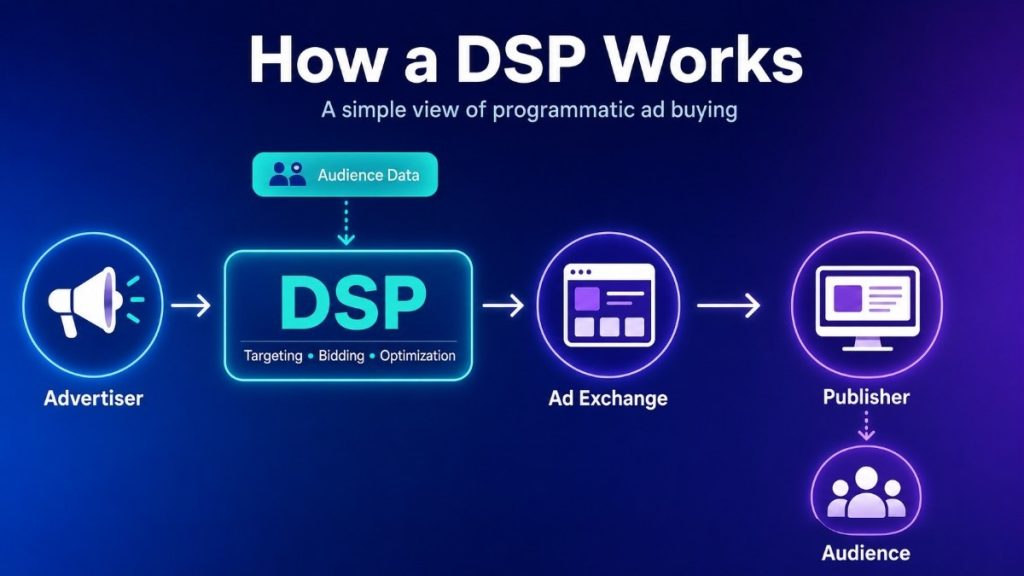
A demand-side platform is software advertisers use to buy digital ad inventory across publishers, ad exchanges, SSPs, and traffic sources.
A DSP helps advertisers:
- Set targeting rules
- Choose ad formats
- Manage bids and budgets
- Buy impressions through real-time bidding
- Track clicks, conversions, CPA, and ROAS
- Block weak sources
- Scale campaigns based on data
Advertisers who want deeper control over programmatic ad buying often use a DSP instead of buying traffic from one publisher or one bundled source.
What Is an Ad Network?
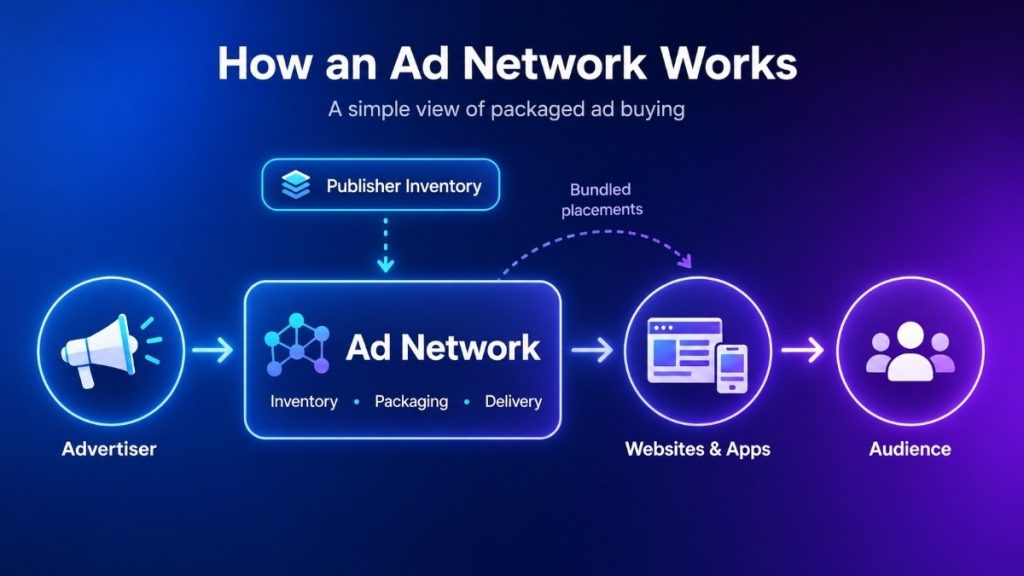
An ad network collects ad inventory from multiple publishers and sells it to advertisers as grouped traffic.
Ad networks often make buying easier because advertisers do not need to manage every publisher or source directly.
An ad network may offer:
- Packaged inventory
- Fixed or simplified pricing
- Basic targeting
- Managed campaign support
- Faster setup
- Less technical work
The tradeoff is that advertisers may have less control over where ads appear, how bids are handled, and which sources drive results.
DSP vs Ad Network: Main Differences
| Factor | DSP | Ad Network |
| Main role | Buys inventory programmatically | Packages and resells inventory |
| Best for | Performance, testing, scaling | Simple setup and broad reach |
| Buying method | Real-time bidding | Fixed, bundled, or managed buying |
| Targeting | More granular | Usually broader |
| Transparency | Higher source-level visibility | Often limited |
| Budget control | Strong bid, cap, and pacing controls | Depends on network |
| Optimization | Real-time campaign changes | Often less granular |
| Fraud control | Source blocking, filters, whitelists | Depends on network policy |
| Skill needed | Medium to high | Low to medium |
How Buying Works in a DSP vs an Ad Network
How DSP buying works
A DSP evaluates each ad opportunity before bidding. It checks campaign rules such as geo, device, OS, source, format, bid value, and budget.
This is useful when advertisers want to improve performance over time. For a deeper explanation, connect this section to real-time bidding naturally.
How ad network buying works
An ad network usually groups publisher inventory and sells it to advertisers by category, format, audience, or placement type.
This can be easier for beginners, but it may limit detailed optimization.
Targeting: Which Gives Advertisers More Control?
A DSP usually gives advertisers more control over targeting.
Common DSP targeting options include:
- Country, region, or city
- Device type
- Operating system
- Browser
- Language
- Website or app
- Source
- Supply partner
- Connection type
- IAB category
- Whitelists and blacklists
- Retargeting
For mobile campaigns, device, OS, connection, app, and geo targeting are especially important. This section can include a natural link to mobile buying basics.
Pricing: DSP vs Ad Network
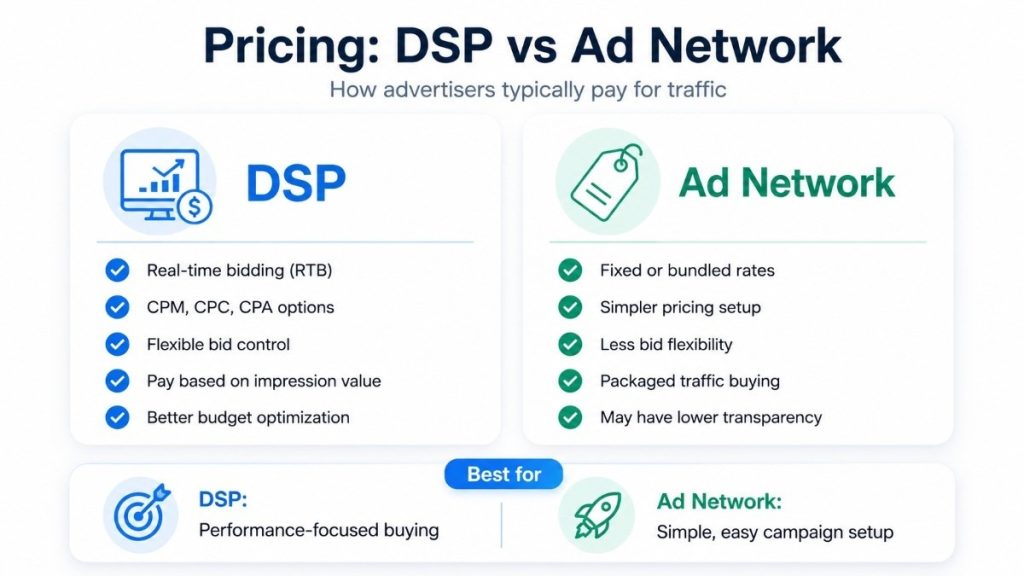
DSP pricing is usually more flexible because advertisers can test different buying models.
Common DSP pricing models:
- CPM: Pay per 1,000 impressions
- CPC: Pay per click
- CPA optimization: Optimize toward conversions
- RTB: Bid based on impression value
Ad networks may use fixed pricing, bundled rates, or managed pricing. This can be simpler, but advertisers may not always see the true source cost or margin.
Transparency and Reporting
DSPs are usually better for advertisers who need detailed reporting.
A DSP can help answer:
- Which sources convert?
- Which devices waste spend?
- Which geos perform best?
- Which ad formats drive better CPA?
- Which placements should be blocked?
- Which segments should get higher bids?
Ad networks may provide useful reports, but source-level visibility can be limited.
When Should Advertisers Use a DSP?
Advertisers should use a DSP when they need more control over traffic quality, targeting, testing, and optimization.
A DSP is a strong fit for:
- Affiliate marketing
- E-commerce campaigns
- App install campaigns
- Lead generation
- Retargeting
- Multi-format testing
- CPA or ROAS-focused campaigns
- Agencies managing multiple campaigns
Advertisers testing formats like native campaign traffic can use DSP controls to compare sources, creatives, bids, and conversion quality.
When Should Advertisers Use an Ad Network?
An ad network can be useful when the advertiser wants a simpler setup.
Use an ad network when:
- You want quick campaign launch
- You do not need source-level control
- You prefer managed support
- You have a simple awareness goal
- You are testing broad traffic before building a deeper buying setup
Ad networks are not always weaker. They are just less flexible for advertisers who need granular control.
DSP vs Ad Network: Which Is Better for Performance Campaigns?
A DSP is usually better for performance campaigns because advertisers can control bids, budgets, sources, targeting, and optimization in real time.
Performance buyers need to know what is working and what is wasting spend. A DSP makes this easier because campaign data can guide daily buying decisions.
Ad networks can still work, but they may be harder to scale if the advertiser cannot see enough source-level data.
How to Choose Between a DSP and an Ad Network
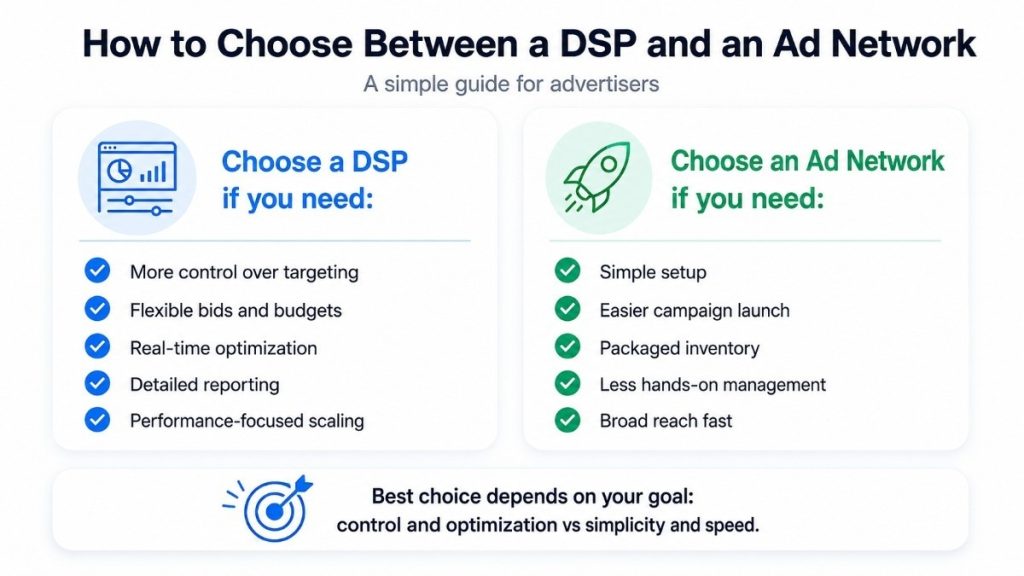
Choose based on your campaign goal, control needs, and team experience.
1. Match the Platform to Your Goal
| Goal | Better Choice | Why |
| Simple reach | Ad network | Easier setup |
| Website traffic | DSP | Better targeting control |
| Leads or sales | DSP | Stronger CPA and ROAS tracking |
| Affiliate offers | DSP | Easier source and geo testing |
| Quick launch | Ad network | Less manual setup |
2. Check How Much Control You Need
Choose a DSP if you want control over:
- Bids
- Budgets
- Geos
- Devices
- Sources
- Apps or websites
- Whitelists and blacklists
Choose an ad network if you want packaged traffic with less hands-on campaign management.
3. Compare Reporting Needs
| Need | DSP | Ad Network |
| Source-level data | Strong | Often limited |
| Real-time changes | Strong | Limited |
| CPA/ROAS tracking | Strong | Depends on network |
| Simple reports | Available | Common |
4. Use This Simple Rule
Choose a DSP when performance, traffic quality, and optimization matter.
Choose an ad network when ease, speed, and basic reach matter more than detailed control.
How PPCmate Helps Advertisers Buy With More Control
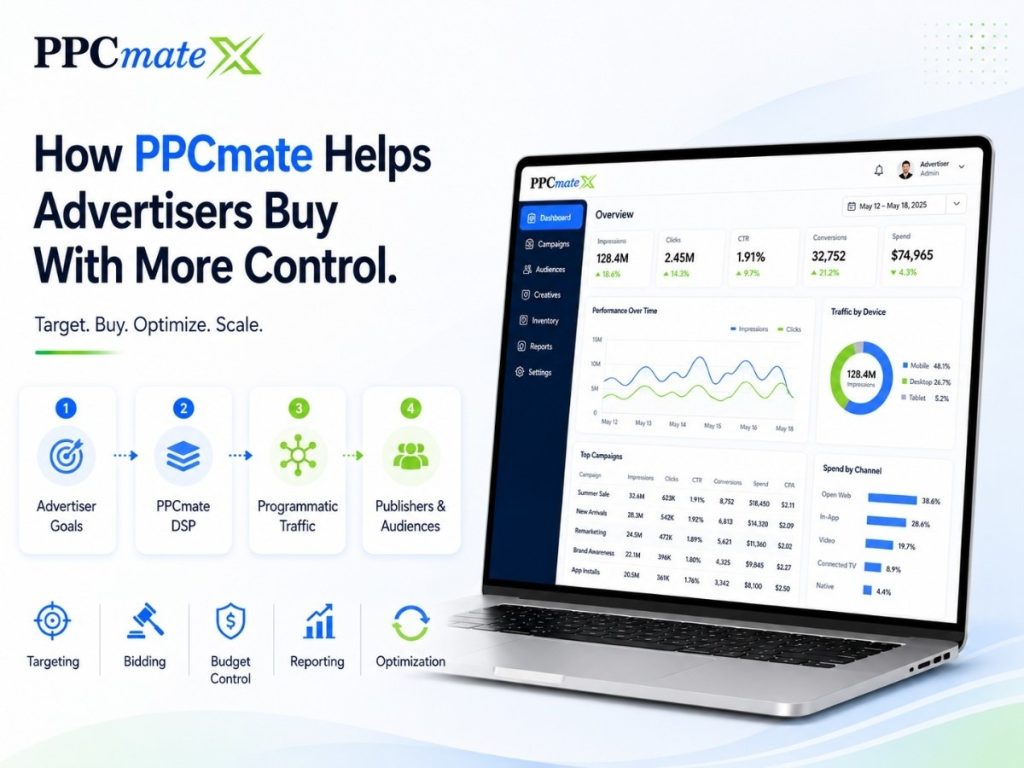
PPCmate gives advertisers flexible tools to buy programmatic traffic across formats, targeting options, and pricing models.
Advertisers can use PPCmate to:
- Launch multi-format campaigns
- Target by geo, device, OS, language, source, website, app, and supply partner
- Test CPM, CPC, and conversion-focused strategies
- Manage bids, budgets, pacing, and frequency
- Review campaign performance from one platform
- Improve traffic quality with source controls
- Use self-serve buying or managed support
This section should connect PPCmate to practical campaign control, not just “more reach.”
Ready to Launch Programmatic Ads With More Control?
PPCmate gives advertisers a flexible DSP for buying targeted traffic across multiple channels, formats, and pricing models.
Whether you want hands-on self-serve control or managed campaign support, PPCmate helps you launch, track, and optimize programmatic campaigns from one platform.
FAQ
Is a DSP the same as an ad network?
No. A DSP helps advertisers buy programmatic inventory through automated bidding. An ad network groups inventory from publishers and sells it as packaged traffic.
Is a DSP better than an ad network?
A DSP is better when advertisers need targeting, bid control, reporting, and optimization. An ad network is better when advertisers want simpler setup and less daily management.
Do ad networks use DSPs?
Some ad networks may use programmatic buying or connect with exchanges behind the scenes. Advertisers may not always see that process directly.
Which is better for affiliate marketing?
A DSP is usually better for affiliate marketing because affiliates often need to test geos, formats, sources, bids, landing pages, and CPA goals.
Which is better for small advertisers?
Small advertisers can use either. A DSP works well if they start with tight targeting and controlled budgets. An ad network may be easier if they need a simple launch.