YouTube is one of the few places where video reaches people at scale on phones, computers and TV screens. For advertisers, the standard way to buy YouTube ad inventory is through Google Ads video campaigns. This guide explains the main video ad formats, how targeting works, how to measure results, how to think about budgets, and what makes a YouTube creative work. Format names and rules below are taken from Google’s own help pages, linked inline, and Google updates these regularly, so check the source before you launch.
Start with the goal
Before choosing formats, decide what the campaign must achieve. YouTube campaigns usually serve one of three jobs:
- Awareness and reach: getting your message in front of as many relevant people as possible at a controlled cost per thousand impressions.
- Consideration: getting people to actually watch, learn about the product and engage with your channel.
- Action: driving site visits, leads, sales or app installs.
The goal decides which formats and bidding you use, and which metrics you judge the campaign on. A campaign built for cheap reach should not be judged on conversions, and vice versa.
YouTube video ad formats
Google describes the current formats in its help article About video ad formats. The main ones:
| Format | How it works | Length | How you pay |
|---|---|---|---|
| Skippable in-stream | Plays before, during or after a video; viewers can skip after 5 seconds | No maximum; under 3 minutes recommended | With CPV bidding, when someone watches 30 seconds (or the whole ad if shorter) or interacts; per impression with Target CPM, Target CPA or Maximize conversions |
| Non-skippable in-stream | Plays before, during or after a video; cannot be skipped | 60 seconds or shorter (15-60 seconds depending on campaign subtype) | Per impression (Target CPM) |
| In-feed video | Appears in places where people discover content, such as search results and alongside related videos | No maximum | When someone clicks to watch; in Video View campaigns, when it autoplays and is watched for at least 10 seconds |
| Bumper | Short non-skippable ad | Up to 6 seconds (minimum 5) | Per impression (Target CPM) |
| YouTube Shorts ads | Plays between Shorts in the vertical feed; viewers can swipe away immediately | Under 60 seconds recommended | CPV (a view is 10 seconds, the end of the ad, or an engagement) or per impression with Target CPM |
| Masthead | Featured placement at the top of YouTube | No maximum; over 10 seconds recommended | Reservation only, through a Google sales representative; CPM or cost per hour |
Choosing a format
- For action goals, skippable in-stream with conversion-focused bidding is the usual starting point.
- For consideration, skippable in-stream and in-feed video ads reward people who choose to watch.
- For reach and frequency, bumper and non-skippable ads deliver a short, guaranteed message.
- For mobile-first, younger audiences, prepare a vertical version for Shorts.
Targeting options
Google lists the targeting options for video campaigns in About targeting for Video campaigns. They fall into two groups: who sees the ad (audiences) and where it appears (content).
Audience targeting
- Demographic groups: age, gender, parental status and household income.
- Detailed demographics: shared traits such as college students, homeowners or new parents.
- Affinity and custom affinity segments: people with a strong, lasting interest in a topic.
- In-market segments: people actively researching products or services like yours.
- Life events: people around milestones such as moving or graduating.
- Custom segments: audiences built from keywords people have recently searched on Google.
- Your data segments: people who have interacted with your videos, channel, website or app.
- Customer Match: re-engaging your own customers using first-party data.
Content targeting
- Placements: specific YouTube channels or videos, or sites and apps on the Google Display Network.
- Topics: videos, channels and sites about chosen subjects.
- Keywords: words or phrases related to a video, channel or type of site.
- Devices: computers, mobile devices and TV screens.
Practical targeting tips
- Do not stack too many layers at once. Each layer narrows the audience, and very narrow campaigns struggle to deliver and learn.
- Run prospecting (new audiences) and remarketing (your data segments) as separate campaigns so you can see what each does.
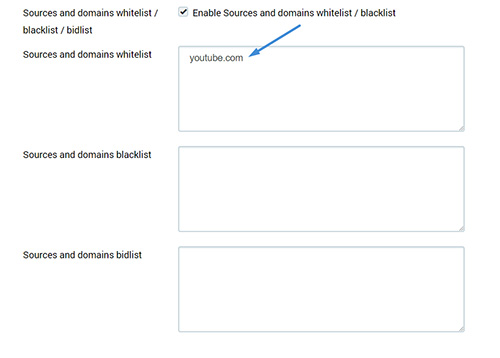
- Placement targeting gives the most control but the smallest reach. It works well for niche channels where your buyers clearly spend time.
- Review where your ads actually ran and exclude channels or content that do not fit your brand or do not perform.
Structure campaigns so results are readable
A clear structure makes it much easier to see what is working. A simple setup that suits most advertisers:
- One campaign per goal. Keep reach, view and conversion campaigns apart, because they use different bidding and different success metrics.
- One targeting idea per ad group. For example, one ad group for an in-market segment, another for a custom segment built from search terms, another for chosen placements. Mixing them hides which one drives results.
- Separate remarketing. People who already visited your site or watched your videos behave differently from new viewers, and usually convert at a different cost.
- Consistent naming. Put goal, country and targeting type in campaign and ad group names so reports are easy to scan and compare later.
Once a structure is running, change one thing at a time. If you swap creatives, targeting and bids on the same day, you cannot tell which change moved the numbers.
Measurement: what to track
Pick metrics that match the goal from the first section:
- Reach goals: unique reach, frequency and cost per thousand impressions.
- Consideration goals: views, view rate, cost per view, how far people watch through the ad, and channel engagement.
- Action goals: conversions, cost per conversion and conversion value. Set up conversion tracking on your site or app before launching, otherwise bidding has nothing to optimize toward.
Video often influences people who convert later through another channel, so look at results over a longer window and compare against search and direct traffic trends, rather than judging only on clicks from the video ad itself.
Budgets and bidding
YouTube campaigns need enough budget to collect data. A budget that delivers only a handful of conversions per week gives automated bidding little to learn from. Practical rules:
- Match bidding to the goal: Target CPM for reach, CPV for views, Target CPA or Maximize conversions for action.
- Start with one or two campaigns rather than splitting a small budget across many.
- Let a new campaign run for a stable period before making large changes; frequent edits reset learning.
- Scale winners gradually and watch cost per result as you do.
Creative tips that hold up
- Use the first 5 seconds. On skippable ads that is all many viewers will see, so show the brand and the core message early.
- Design for sound off and small screens. Use captions, large text and clear visuals.
- Make one point per ad. Short ads especially work best with a single message.
- Give a clear next step. Tell viewers what to do and make the landing page match the ad.
- Prepare several aspect ratios. Horizontal for in-stream, vertical for Shorts, square where useful.
- Test variations. Different openings, lengths and calls to action, judged on your main metric.
YouTube campaign checklist
- Goal and main metric decided.
- Formats chosen to fit the goal.
- Conversion tracking set up and tested.
- Audience and content targeting kept reasonably broad to start.
- Brand-unsuitable content and placements excluded.
- Creatives in the right lengths and aspect ratios, with the message in the opening seconds.
- Budget large enough to gather data; review schedule agreed.
Common mistakes
- Repurposing a TV ad unchanged. A slow build-up loses viewers before the skip button appears.
- Judging awareness campaigns on clicks. Use reach, frequency and view metrics instead.
- Over-narrow targeting that stops the campaign from delivering.
- No conversion tracking, which leaves bidding blind.
- Ignoring placement reports and letting spend go to irrelevant channels.
- Only horizontal creative, which leaves Shorts inventory unused or poorly served.
- Changing bids and targeting daily, which keeps campaigns in learning.
FAQ
Can people skip YouTube ads?
Skippable in-stream ads can be skipped after 5 seconds, and Shorts ads can be swiped away immediately. Non-skippable in-stream and bumper ads cannot be skipped, according to Google’s format guide.
How long should a YouTube ad be?
It depends on the format: bumpers are up to 6 seconds, non-skippable ads up to 60 seconds, and Google recommends keeping skippable ads under 3 minutes. Shorter is usually easier to make work, but the right length is the one that tells your story clearly.
Can I show my ads only on specific channels?
Yes. Placement targeting lets you choose specific YouTube channels or videos. Expect smaller reach than audience or topic targeting.
Can I manage YouTube ads alongside other channels?
Yes. Many advertisers run YouTube through Google Ads directly. PPCmate also lists YouTube Ads among the ad channels available on its self-serve platform, next to its own native, display, push and pop-under traffic.