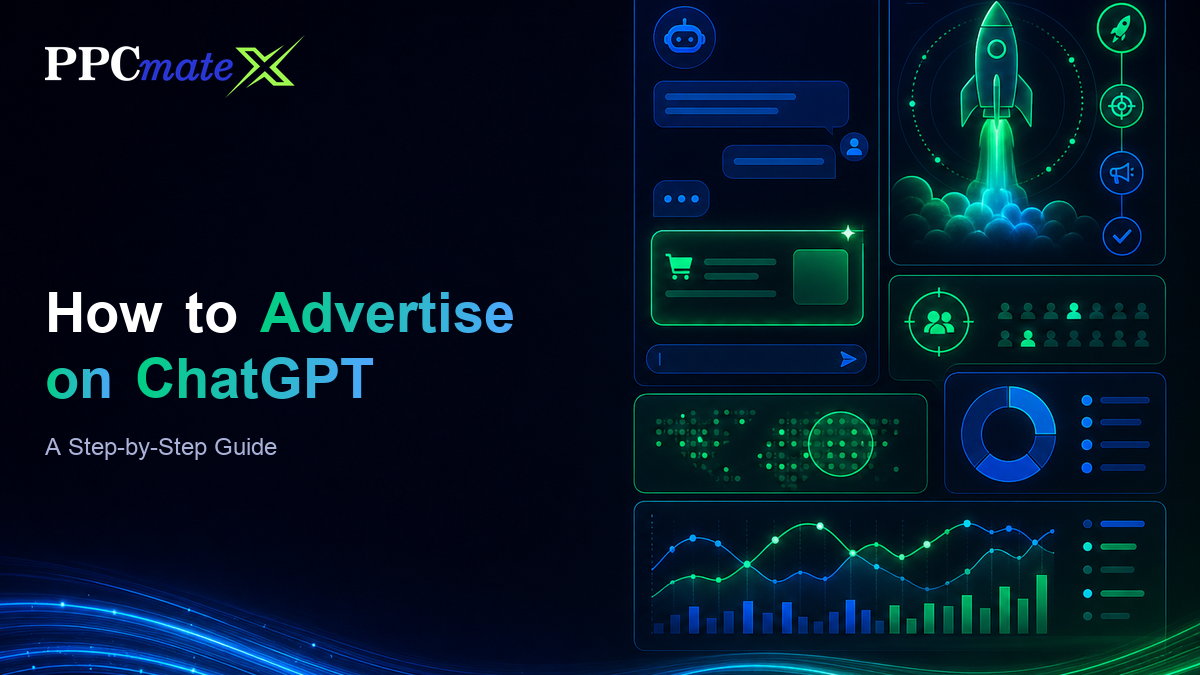
To advertise on ChatGPT, you place sponsored placements that appear alongside ChatGPT conversations, targeted by the topic and intent of what people are asking. You can do this through OpenAI’s own ads program if you qualify, or through a platform like PPCmate ChatGPT ads, which runs campaigns on its own house accounts so you only need a prepaid balance. The steps below walk through the whole process, from planning to measuring results.
What ChatGPT Ads Are
ChatGPT ads are paid placements shown to users of ChatGPT, generally clearly labelled as sponsored and kept separate from the model’s own answers. Instead of matching a short search keyword, they are matched to the context of a conversation: someone asking for a weekend trip plan, help choosing accounting software or ideas for a birthday gift is expressing intent in natural language, and a relevant ad can appear next to that exchange.
This is a new channel. Formats, targeting options, eligibility rules and reporting are still evolving, so treat anything you read about it, including this guide, as a starting point and check current policies before you launch. What does not change is the basic logic of intent-based advertising: relevant offer, clear message, honest landing page, careful measurement.
Why Advertisers Are Interested
- Intent in full sentences. Conversations often reveal more about need and context than a two-word search query.
- Research-stage audiences. Many people use ChatGPT to compare options before they buy, which suits considered purchases such as software, travel, education and financial products.
- Less crowded auctions. Early channels tend to have fewer competing advertisers than mature ones, though this changes as adoption grows.
- A complement to search. ChatGPT ads work well next to Google search ads rather than replacing them.
Step 1: Decide Whether ChatGPT Fits Your Offer
Before spending anything, ask whether people would naturally discuss your product with an AI assistant. B2B tools, online courses, apps, travel, home services and e-commerce products that need some explanation are usually good fits. Impulse products with no research phase may perform better on other formats, such as push, native or pop-under traffic.
Also check policy fit. Like every major ad platform, ChatGPT ads have restricted and prohibited categories. Regulated areas such as health, finance, gambling and political content are typically limited or excluded. If your offer sits in a grey area, confirm before you build creatives.
Step 2: Choose How You Will Buy The Ads
There are two broad routes:
- Directly with OpenAI. Access to ChatGPT advertising has been rolled out gradually, and direct programs may require an application, minimum commitments or eligibility checks. Check OpenAI’s current advertiser information for the latest requirements.
- Through a self-serve platform. PPCmate runs ChatGPT campaigns on its own house accounts. You do not need your own ad account, you fund one prepaid balance (minimum deposit $25, no subscription), and the same balance can be used for Google, Microsoft, Meta, TikTok, Reddit, LinkedIn and YouTube ads, plus pop-under, push, native, display, video and HTML5 traffic.
The right choice depends on your budget, how quickly you want to start and whether you want to manage several channels from one place.
Step 3: Define Your Goal And Conversion
Pick one primary goal per campaign: leads, sign-ups, sales, app installs or qualified visits. Then define exactly what counts as a conversion and make sure you can track it, for example with a thank-you page, a tracking pixel or a postback from your tracker. Without a clear conversion event, you will not know whether the channel works.
Step 4: Map The Conversations You Want To Appear In
Instead of a keyword list, think in conversation themes. Write down the questions your ideal customer asks before buying. For a project management tool, examples might be:
- How do I organise tasks for a small remote team?
- What is the best way to track client projects and deadlines?
- Compare simple tools for managing a marketing calendar.
Group these into two or three themes, and build a separate campaign or ad group for each so you can see which theme drives results.
Step 5: Write Ads That Match The Conversation
People reading ChatGPT are in a problem-solving mindset, so ads that read like a helpful next step tend to work better than loud promotional copy.
Copy Tips
- Lead with the problem you solve, in the user’s own language.
- State one concrete benefit, not a list of features.
- Use a specific call to action such as “Start a free trial” or “See pricing”.
- Avoid exaggerated claims; they hurt trust and may break policy.
Landing Page Tips
Send traffic to a page that continues the conversation: the same promise as the ad, a short explanation, social proof if you have it, and one clear action. A fast, mobile-friendly page matters because many ChatGPT users are on phones.
Step 6: Set Budget And Bids
Start small and learn. A test budget that buys enough clicks to judge conversion rate is more useful than a large budget spread across many untested ideas. On PPCmate, CPC bids start from $0.001 and CPM bids from $0.10, though competitive placements will need higher bids to win volume. Set a daily cap so a new campaign cannot overspend while you are still learning.
Because PPCmate uses one prepaid balance, you cannot spend more than you have deposited, which makes budgeting predictable. New advertisers can also rely on a 7-day money-back guarantee while they evaluate the platform.
Step 7: Launch And Check Traffic Quality
After launch, check the first data within a day. Confirm that clicks are landing, that your tracking fires and that the bounce rate looks reasonable. On PPCmate every request is filtered for bots before bidding, and refused traffic is not billed, so you are not paying for obviously invalid visits. It is still good practice to watch for unusual patterns in your own analytics.
Step 8: Measure, Optimise And Scale
Give each campaign enough data before making big decisions. Then:
- Pause themes with spend but no conversions.
- Rewrite ads with a low click-through rate.
- Raise bids gradually on themes that convert at an acceptable cost.
- Test a second landing page against your best one.
- Compare results with your other channels to decide where the next dollar goes.
For ideas on how campaigns are structured across formats, the PPCmate case studies show illustrative examples by channel and goal.
Common Mistakes To Avoid
- Copying search ads word for word. Conversational placements reward helpful, context-aware copy.
- No conversion tracking. Clicks alone do not tell you whether the channel is profitable.
- Too many themes at once. Small budgets spread thin produce no clear winners.
- Ignoring policy. Rejected ads cost time; read the rules first.
- Judging too early. A few days of data on a new channel is rarely enough.
ChatGPT Ads For Agencies
If you manage campaigns for clients, running ChatGPT ads through one platform with one balance can simplify reporting and billing. PPCmate also offers a white-label DSP for agencies that want to resell media buying under their own brand. You can contact the PPCmate team to discuss agency setups.
How ChatGPT Ads Compare With Other Channels
ChatGPT ads sit between search and native advertising. Like search, they respond to expressed intent, but the intent is described in a conversation rather than a keyword. Like native ads, they appear within a content experience, so the creative has to feel relevant to what the user is reading. Lessons from both channels apply: tight relevance from search, and helpful, non-intrusive messaging from native.
In practice, many advertisers run ChatGPT ads as one part of a mix. Search captures people who already know what they want, ChatGPT reaches people still exploring, and lower-cost formats such as push, native or display can build reach and retarget visitors. Running these from one balance makes it easier to move budget toward whichever channel produces the best cost per conversion.
A Simple Test Plan For Your First Month
- Week 1: launch two conversation themes with one ad each and a modest daily cap.
- Week 2: check tracking, pause anything clearly irrelevant and add a second ad variation to each theme.
- Week 3: shift budget toward the stronger theme and test a new landing page headline.
- Week 4: compare cost per conversion with your other channels and decide whether to scale, refine or stop.
Getting Started
If you want to test ChatGPT ads without applying for your own ad account, you can create a free PPCmate account, add a balance from $25 and launch a small test campaign. Start at PPCmate and grow from there once you have data.
Frequently Asked Questions
Can anyone advertise on ChatGPT?
Access to ChatGPT advertising has been rolled out gradually and direct programs may have eligibility requirements. Platforms such as PPCmate run ChatGPT campaigns on their own house accounts, so advertisers can start with a prepaid balance instead of their own ad account.
How much do ChatGPT ads cost?
Costs depend on competition, targeting and bidding. On PPCmate, CPC bids start from $0.001 and CPM bids from $0.10, with a $25 minimum deposit and no subscription. Competitive placements usually need higher bids.
Do I need my own OpenAI ad account?
Not if you use PPCmate. Campaigns run on PPCmate's house accounts and are paid from your PPCmate balance.
Are ChatGPT ads mixed into the AI's answers?
ChatGPT ads are presented as labelled sponsored placements, kept separate from the model's answers. Check OpenAI's current policies for the latest details on format and placement.
What kinds of businesses suit ChatGPT ads?
Offers that people research before buying, such as software, courses, apps, travel and services, tend to fit well. Regulated categories are usually restricted.
How do I measure ChatGPT ad performance?
Define a conversion event, such as a sign-up or purchase, and track it with a pixel, thank-you page or postback. Compare cost per conversion with your other channels.
Is there a refund if it does not work for me?
PPCmate offers a 7-day money-back guarantee for advertisers evaluating the platform.