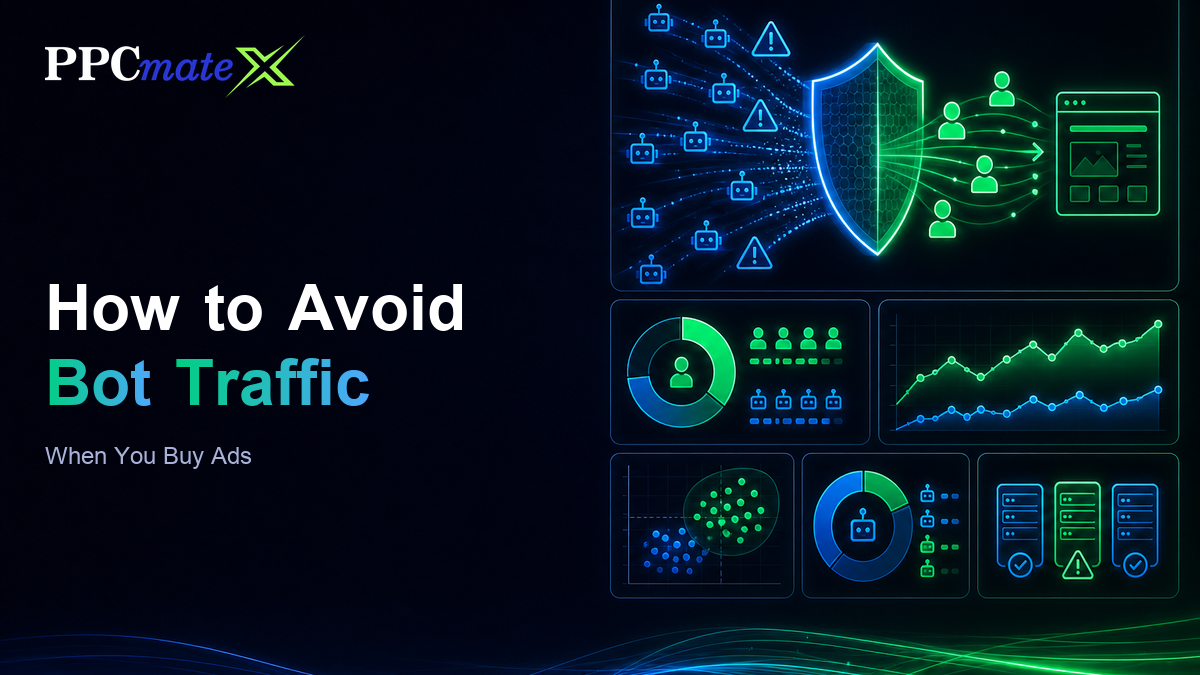
To avoid bot traffic when you buy ads, choose platforms that filter requests before you bid, pay only for traffic that passes those checks, and watch your own analytics for patterns that humans do not produce. No source is completely bot-free, but a combination of pre-bid filtering, careful targeting and regular placement reviews keeps the share of fake traffic small and keeps it off your bill.
What Bot Traffic Is And Why It Matters
Bot traffic is any ad impression, click or visit generated by automated software rather than a real person. Some bots are harmless, such as search engine crawlers. The ones that hurt advertisers are those that load ads, click them or fake visits, either to inflate a publisher’s revenue or simply because they browse the web automatically.
The cost is not only the money spent on fake views. Bot traffic pollutes your data. It drags down conversion rates, inflates click-through rates, confuses bidding algorithms and can lead you to scale the wrong placements. The industry usually calls this invalid traffic (IVT), split into general invalid traffic, which simple lists can catch, and sophisticated invalid traffic, which imitates human behavior and needs deeper analysis.
Bot traffic also hurts beyond the ad bill. Fake visits skew the audience data you use for retargeting, make A/B tests unreliable and can trigger fraud flags with payment or affiliate partners if fake leads reach them. Catching it early protects your whole marketing stack, not just one campaign.
Where Bot Traffic Comes From
- Data centers and hosting providers. Many bots run on cloud servers rather than home or mobile connections.
- Low-quality publishers. Some sites buy cheap traffic or run scripts to increase ad revenue.
- Click farms and incentivized traffic. Real devices operated at scale to generate clicks with no buying intent.
- Malware and hijacked browsers. Infected devices load ads in the background without the owner knowing.
- Spoofed domains and apps. Requests that claim to come from a well-known site but actually come from somewhere else.
How To Detect Bot Traffic In Your Campaigns
Knowing how to detect bot traffic starts with your own data. None of these signs proves fraud on its own, but several together are a strong warning.
Unusual Click And Engagement Patterns
- CTR far above what the format normally produces, with no matching rise in conversions.
- Sessions that last zero or one second, or bounce rates close to 100% from one source.
- Clicks arriving in perfectly regular intervals or sudden spikes at odd hours.
Technical Fingerprints
- Lots of traffic from data center IP ranges rather than residential or mobile networks.
- Outdated or unusual browser versions, headless browsers or mismatched user agents.
- Screen resolutions, languages or time zones that do not match the targeted country.
Placement-Level Red Flags
- A single site or app sending a large share of your volume with no conversions.
- Placement names that look random or change constantly.
- Domains in your reports that do not match the sites you expected to buy.
Conversion Quality
Look past the conversion count. Fake leads with invalid emails, sign-ups that never log in, or installs with no in-app activity point to automated or incentivized traffic. Track at least one post-conversion event so you can judge quality, not just volume.
Practical Ways To Avoid Bot Traffic When Buying Ads
1. Buy From Platforms That Filter Before The Bid
Filtering after the fact means you pay first and argue later. The strongest protection checks every request before a bid is placed, so obvious bots never reach your campaign. Ask any ad platform when filtering happens and whether filtered traffic is billed.
2. Make Sure Refused Traffic Is Not Billed
Some networks detect invalid traffic but still charge for it, or offer only partial refunds weeks later. Prefer sources that simply do not bill traffic that fails their checks.
3. Use Blocklists And Allowlists
Block placements that send volume without results, and once you find sources that convert, consider running separate campaigns limited to those proven placements. Review your lists regularly because sources change.
4. Tighten Targeting
Narrow geos, sensible device and operating system targeting and connection-type filters reduce exposure to data center traffic. Very broad, very cheap campaigns attract more low-quality supply.
5. Do Not Chase The Lowest Price Blindly
Extremely cheap traffic is sometimes cheap because it is not human. Judge sources by cost per real conversion, not by CPM or CPC alone. If you are deciding between pricing models, our guide on CPM vs CPC and the PPCmate pricing page show how to compare them on effective cost.
6. Add Post-Click Checks On Your Side
Use server-side conversion tracking where possible, add simple bot checks on forms, and separate traffic sources with clear tracking parameters so you can isolate a bad source quickly.
7. Start Small And Scale Proven Sources
Test each new source with a limited budget, review the placement report after a few days, and scale only what shows real engagement. Fraud tends to hide in volume you never inspected.
What A Good Traffic Quality Setup Looks Like
- Every request is checked against bot signals before bidding.
- Traffic that fails the checks is not charged.
- You can see placement-level reports and block sources yourself.
- Your own analytics confirm engagement and conversions from the remaining traffic.
- You review and adjust weekly rather than waiting for the month-end bill.
Bot Traffic Across Different Ad Formats
Risk varies by format, so the checks you emphasize should vary too.
- Pop-under: billed on impressions, so watch time on page and the share of visits that load your landing page fully.
- Push: watch for clicks that arrive in bursts from small subscriber lists and for sources whose clicks never reach your page.
- Native and display: watch CTR versus conversions per placement, and check that domains in your reports match the sites you expected.
- Video: compare completion rates with engagement; a perfect completion rate with no clicks or conversions can be a sign of automated playback.
- Search and social: major platforms run their own filtering, but you should still review search terms, placements and lead quality.
What To Do When You Find Bot Traffic
- Pause or block the source. Stop the bleeding first by excluding the placement, domain or sub-source.
- Collect evidence. Export placement reports, timestamps, IP or network data where available, and conversion quality records.
- Contact the platform. Share the data and ask how the traffic was billed and whether it should have been filtered.
- Clean your data. Exclude the affected period or source from optimization so bidding algorithms do not learn from fake signals.
- Adjust your setup. Tighten targeting, update blocklists and add tracking that would catch the problem sooner next time.
Keep a simple log of every source you block and why. Over time it becomes a useful record of which supply types, geos and formats cause problems for your offers.
Acting fast matters. The longer bad traffic runs, the more it distorts automated bidding, because algorithms optimize toward whatever looks like success.
Questions To Ask Any Traffic Source
- Is traffic filtered before the bid or only after delivery?
- Is filtered or refused traffic ever billed?
- Can I see placement-level reporting and block sources myself?
- Is there a refund or guarantee if quality is poor?
Clear, direct answers to these questions are a good sign. Vague answers are a reason to test with a small budget first.
How PPCmate Handles Bot Traffic
PPCmate is a self-serve AI ad platform for buying pop-under, push, native, display, video and HTML5 traffic, and for running Google, Microsoft, Meta, TikTok, Reddit, LinkedIn, YouTube and ChatGPT ads on PPCmate’s own house accounts, so advertisers do not need their own ad accounts. On PPCmate, every request is filtered for bots before bidding, and refused traffic is not billed. You can read how this works on the PPCmate traffic quality page.
Filtering reduces risk; it does not replace your own checks. Keep watching placement reports and post-conversion quality. To test a source with low commitment, PPCmate works from one prepaid balance with a $25 minimum deposit, no subscription and a 7-day money-back guarantee. For illustrative setups across formats, see the PPCmate case studies. Agencies that want to resell filtered traffic under their own brand can also use PPCmate’s white-label DSP.
The Bottom Line
You cannot remove every bot from the internet, but you can stop paying for most of them. Buy where filtering happens before the bid, make sure refused traffic is not billed, learn the signs of fake engagement, and judge every source by real conversions.
Want to test traffic that is checked before you pay? Create a PPCmate account and launch a small campaign to see the quality for yourself.
Frequently Asked Questions
What is bot traffic in advertising?
Bot traffic is ad impressions, clicks or visits generated by automated software instead of real people. It wastes budget and distorts campaign data.
How do I detect bot traffic on my website?
Look for very short sessions, near 100% bounce rates from specific sources, data center IP addresses, unusual browsers or user agents, and CTR spikes without matching conversions.
Can bot traffic be completely avoided?
Not completely. The practical goal is to keep it small through pre-bid filtering, careful targeting and regular placement reviews, and to avoid paying for what gets filtered.
Is cheap traffic always bot traffic?
No, but unusually cheap traffic deserves extra scrutiny. Judge each source by cost per real conversion rather than its CPM or CPC alone.
What is the difference between GIVT and SIVT?
General invalid traffic (GIVT) includes known crawlers and data center traffic that simple lists can catch. Sophisticated invalid traffic (SIVT) imitates human behavior and requires deeper analysis to detect.
Do I pay for bot traffic on PPCmate?
On PPCmate, every request is filtered for bots before bidding, and refused traffic is not billed.
Should I block placements myself?
Yes. Even with platform filtering, blocking placements that send volume without engagement or conversions is one of the most effective ways to protect your budget.