
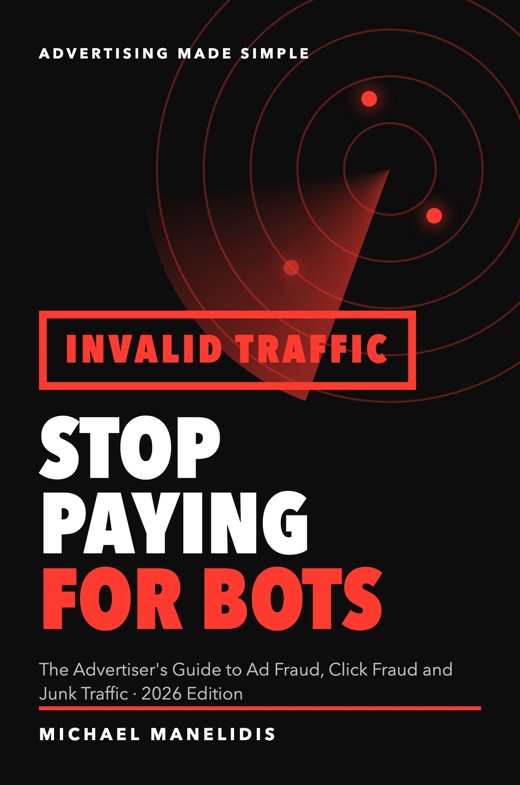
Stop Paying
for Bots
The Advertiser’s Guide to Ad Fraud, Click Fraud and Junk Traffic (2026 Edition).
By Michael Manelidis.
Six printable pages. No email needed.
The six checklists from the book
About the book
Bots, click farms and made-for-advertising sites take a large share of many ad budgets, often without anyone noticing. You don’t need an expensive verification tool to fight back. You need the reports you already have, and to know what to look for.
- The 10 warning signs of junk traffic in your own reports, with a worked example
- Every fraud type explained simply: bots, click farms, spoofing, app and CTV fraud, MFA sites, AI traffic
- Step-by-step clean-ups for Google, Microsoft, Meta, TikTok, programmatic, pop, push and native
- Tracking that exposes fraud: source IDs, postbacks and profit per placement
- Which tools are worth paying for, and which you already have
- A 30-day clean-up plan and a weekly 15-minute fraud check
Available on Amazon as a Kindle eBook (also free with Kindle Unlimited), paperback and hardcover. Part of the Advertising Made Simple series.
Get the book on Amazon See book 1: Programmatic Advertising for BeginnersBuy traffic that has already been checked
PPCmate is a self-serve advertising platform with pre-bid quality filters. The method in the book works on any platform, and chapter 7 gives you the questions to ask whichever one you choose.
Open a PPCmate accountFrequently asked questions
How can I tell if I'm paying for bot traffic?
Check every placement in your report against the book's 10 warning signs. If one placement shows two or more, block it.
Do I need an expensive verification tool?
No. The book shows how to find junk traffic using the reports you already have, and which tools are worth paying for.
Which ad platforms does the book cover?
Google, Microsoft, Meta, TikTok, LinkedIn, programmatic, pop, push and native, each with a step-by-step clean-up.
What's in the free checklists?
Six printable pages: the 10 warning signs, Google/Microsoft and Meta/social clean-ups, programmatic/pop/push/native checks, questions to ask before you deposit, and a 30-day clean-up plan. No email needed.
How long does a weekly fraud check take?
About 15 minutes, using the weekly check in chapter 10.